Apple Glasses 2026: What We Know So Far
Apple Glasses have dominated tech headlines ever since early patents hinted that Cupertino wanted to put a screen on your face. Thanks to a fresh wave of Apple Glass rumors—including the May 2025 supply-chain leak—momentum has never been stronger. The big takeaway? Apple Glasses are now tipped to be the company’s next mass-market wearable after Apple Watch. Multiple insiders claim that Tim Cook shifted key engineers off the Vision Pro and onto the Apple Glasses team in late 2024. That reallocation lines up with Apple’s long-term goal of making lightweight eyewear that can be worn all day, rather than a bulky mixed-reality headset.
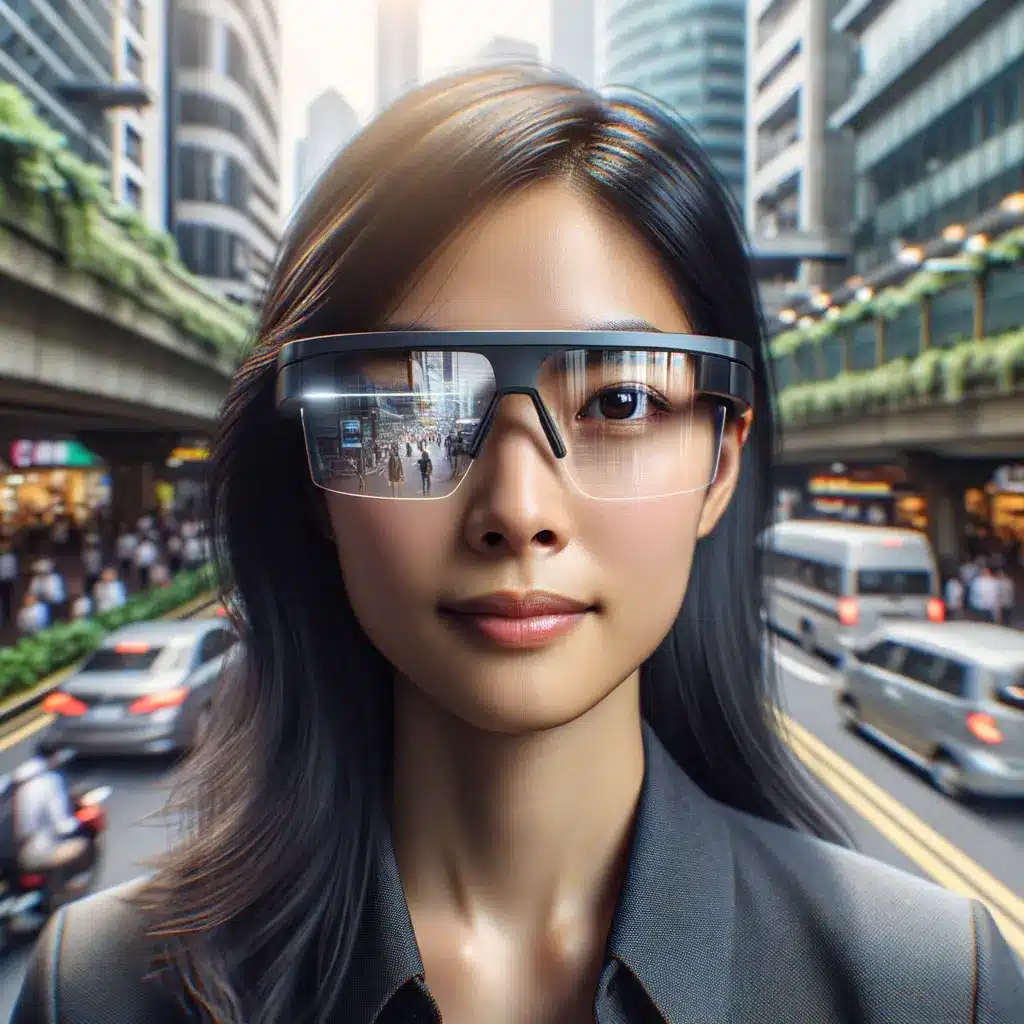
In practical terms, Apple Glasses are expected to look like traditional prescription frames. Version 1 will focus on audio-first assistance—think hands-free Siri queries and POV photo capture—while Version 2 adds a true heads-up display for contextual overlays. If this roadmap sticks, Apple Glasses could become as ubiquitous as AirPods. For readers tracking broader Apple developments, see our recent breakdown of how Vision Pro sales inform Apple’s AR strategy and our explainer on Apple Intelligence—the AI layer that will make these glasses smart.
For now, remember one key fact: Apple Glasses are more than a speculative concept. Suppliers are already prototyping micro-OLED displays as thin as 0.5 mm, and Luxshare reportedly secured an early assembly contract. Put simply, Apple Glasses are coming; the only debate is when.

Apple Intelligence: The Software Backbone of Apple AR Glasses
Hardware is only half the story; the brains of Apple AR glasses will be Apple Intelligence. Announced in 2024 and still rolling out across iPhone, iPad and Mac, Apple Intelligence is the company’s conversational AI framework that radically upgrades Siri. The full personal-assistant feature set—contextual reminders, real-time translation, proactive suggestions—won’t reach consumers until iOS 20 and macOS 16, both scheduled for late 2026. That timing neatly dovetails with the Apple Glasses release date window.
Why is Apple Intelligence so critical? Lightweight eyewear cannot rely on touch or a bulky UI. Instead, users will speak natural language commands while the glasses quietly process data in the Secure Enclave or offload tasks to cloud servers running Apple Silicon hardware. Think “Siri, what building am I looking at?” or “Translate that street sign to English.” According to internal memos leaked to Bloomberg, Apple is experimenting with “edge inference,” allowing on-device Apple M-series co-processors to handle basic vision tasks without draining battery life.
The company is also testing eight companion AI products: an “AI Pin,” camera-equipped AirPods, and—of course—Apple AR glasses. Each device shares a common intelligence layer, promising a seamless ecosystem. If you’re curious how Apple Intelligence compares with Google Gemini or OpenAI ChatGPT, check out our in-depth comparison of voice assistants in 2025. Bottom line: without Apple Intelligence, Apple Glasses would be just another camera-on-your-face gadget. With it, they could redefine ambient computing.

Apple Glasses Release Date: 2026 Announcement or 2027 Launch?
The million-dollar question is the Apple Glasses release date. Leaked investor roadmaps pointed to a 2026 unveiling at WWDC, but supply-chain whispers suggest a commercial launch could slip to early 2027. Apple has a long history of announcing category-defining products well before they ship—original iPhone (2007), Apple Watch (2014) and Vision Pro (2023) each had multi-month gaps. This runway lets developers build apps and gives Apple time to finalize regulatory approvals for medical-grade lenses.
In May 2025, industry analyst Ming-Chi Kuo reported that component suppliers like TSMC and Sony were “on track” for late-2026 mass production of micro-OLED modules. However, subsequent Apple Intelligence integration tests allegedly forced a three-month delay. Internally, Apple still views 2026 as the launch year—marketing teams have blocked out Q4 ad budgets—but retail staff trainings are penciled in for Spring 2027.
Our best estimate: a June 2026 keynote teaser, followed by a developer kit release, then retail availability between January and April 2027. That timeline matches Apple’s documented pattern and gives third-party partners enough runway to create killer apps. Want historical context? Read our timeline of Vision Pro’s release cycle for a play-by-play of Apple’s phased rollouts.
(YouTube video embedded here for readers who prefer the full visual breakdown of these dates.)
Key Features: Cameras, Prescription Lenses & Two Versions Explained
According to the transcript and corroborating leaks, Apple is planning two distinct iterations of Apple AR glasses. Version 1 is positioned as a smart-audio companion to your iPhone—closer to Meta’s Ray-Ban Stories than a full AR headset. Expect dual 4-megapixel cameras discreetly mounted in the frame, beamforming microphones, and bone-conduction speakers that pipe Siri responses directly to your ears. All processing will be off-loaded to a paired iPhone via ultra-wideband (UWB) for minimal latency.
Version 2 elevates the experience with a micro-OLED heads-up display that overlays notifications, navigation arrows and translation snippets onto real-world objects. Early patents show waveguide optics and eye-tracking sensors similar to those in Vision Pro but miniaturized for a 50-gram chassis. Crucially, Apple will offer prescription lens inserts through a partnership with Zeiss, mirroring the Vision Pro’s lens program. That means users who already wear glasses won’t have to compromise vision quality.
Health and wellness remain a priority. Sources indicate that Apple Glasses will include fall-detection gyros and even a low-power heart-rate sensor in the nose bridge for passive monitoring—features that dovetail with Fitness+ and HealthKit. Developers can tap into these sensors via an expanded ARKit API. If you’re building wellness apps today, our tutorial on integrating HealthKit with spatial data is a must-read.
In short, Version 1 gets you in the door; Version 2 delivers true AR. Both rely on the same Apple Intelligence backbone to contextualize what you see and hear.

Apple Glasses Price Predictions and Market Positioning
Pricing will make or break Apple Glasses. The Vision Pro’s $3,499 launch taught Apple a hard lesson about sticker shock. Insiders now say Cupertino aims for mass-market appeal: Version 1 of Apple Glasses could land below $500, while Version 2 with integrated displays may cost between $600 and $700. That would position the glasses near the Apple Watch Ultra ($799) and keep them competitive with Xreal Air 2 and Meta Ray-Ban glasses.
How can Apple hit those numbers? First, economies of scale. By 2026, micro-OLED yields are expected to double, slashing per-unit costs. Second, Apple could subsidize hardware through service revenue. Imagine a bundled Apple One “Vision” tier that pairs Apple Glasses with iCloud+, Fitness+ and an expanded Apple TV+ library of spatial video content.
Third, component commonality matters. The rumored S2 SiP powering Apple Glasses reportedly shares IP blocks with Apple Watch Series 11, reducing R&D overhead. Finally, Apple’s premium brand equity allows a modest price premium—analysts estimate $100-$150 over direct competitors—without alienating early adopters.
If you’re budgeting for 2027 tech upgrades, bookmark our ongoing tracker comparing Apple Glasses price rumors against final retail tags. For perspective, revisit our post on Apple Watch pricing history and see how initial estimates stacked up to launch-day reality.
Should You Buy Apple Glasses? Final Thoughts & Next Steps
Apple Glasses promise to merge digital convenience with everyday eyewear, but should you commit on day one? Early adopters will gain unparalleled access to Apple Intelligence in the most natural form factor yet, plus seamless integration with iPhone, Apple Watch and future AI accessories. If you’re a developer, jumping in early means first-mover advantage—similar to those who built hit apps for the original iPhone.
However, remember the classic Apple pattern: Version 1 often lacks marquee features that arrive a year later. If full AR overlays are essential for you, waiting for Version 2 might be the smarter play. Budget also matters. At an estimated $500-$700, Apple Glasses aren’t impulse buys, but they’re far cheaper than Vision Pro. Compare that cost to upgrading your iPhone or adding an Apple Watch Ultra, and weigh which device will deliver the most day-to-day value.
Finally, consider ecosystem readiness. Apple Intelligence features should be fully rolled out across iOS, iPadOS and macOS by late 2026. That means a richer app catalog and better cross-device handoff by the time Apple Glasses hit shelves in 2027. For deeper context, read our guide to Apple Intelligence rollouts and our Vision Pro review.
Bottom line: if you crave cutting-edge tech and already live in Apple’s ecosystem, Apple Glasses will likely become your next must-have gadget. For everyone else, monitor developer adoption and early reviews before pulling the trigger. Either way, Apple Glasses are set to redefine how we interact with technology—and 2027 can’t come soon enough.