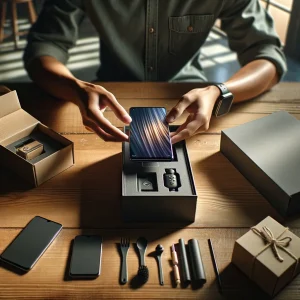
Why the Samsung Transparent Phone Matters More Than Any Flagship Yet
The buzz around the Samsung transparent phone has reached a fever pitch, and it is easy to see why. For more than a decade, premium handsets have inched forward with better cameras, faster chips, and sleeker frames, but nothing truly revolutionary—until now. Multiple leaks suggest that Samsung’s first fully transparent smartphone, code-named Galaxy Glass, is nearing public debut. If the rumors prove accurate, this device will erase the line between hardware and interface, letting apps float in mid-air while the phone itself almost disappears. Such a leap positions Samsung directly against Apple as the next great iPhone competitor and forces the entire Android ecosystem to rethink design priorities.
Early patent filings reveal a monolithic sheet of glass doubling as body and screen, powered by a transparent OLED display that dims on command. Imagine checking notifications while still seeing the café table beneath your palm. Analysts predict that novelty alone could trigger a wave of upgrades similar to the first iPhone launch. Key benefits consumers are excited about include:
• A truly borderless aesthetic
• Under-display camera with no punch-hole distractions
• New AR-style interface layers floating inside the glass
Tech fans who followed Samsung’s journey with foldables or the Galaxy Z Fold series will remember how radical form factors can revive user excitement. The Samsung transparent phone promises to repeat that surge—only on a much grander scale.

Inside the Galaxy Glass: Breakthroughs in Transparent OLED Display Technology
Building a Samsung transparent phone was impossible until recent advances in materials science converged. Engineers at Samsung Display have reportedly perfected a sixth-generation transparent OLED display that can switch from crystal clear to fully opaque in milliseconds. The magic lies in a multilayer stack: an electro-chromic substrate for dimming, semi-transparent cathodes that emit light in both directions, and nano-thin wiring invisible to the naked eye. Combining those layers produces vivid colors without the faint haze that plagued first-gen prototypes from a decade ago.
Underneath that glass, miniaturized chipsets now live in an ultra-thin side rail. Floating inside the pane are sensors printed with a new indium-gallium-zinc oxide conductor, exposing zero circuitry unless direct sunlight reveals a faint shimmer. Even the battery received a makeover, adopting partial-light-transmitting cells from Samsung SDI that maintain 4,000 mAh capacity while still letting 30 % of ambient light pass through.
To validate durability, Samsung allegedly put the Galaxy Glass through 200,000 bend-stress cycles—more stringent than the stress tests used for its foldables. That means the transparent smartphone should withstand real-world drops just as well as any Galaxy S-series flagship. For enthusiasts following related breakthroughs—such as Corning’s Gorilla Glass Victus 2 or graphene batteries—internal links to those topics can deepen understanding. Altogether, these innovations confirm why the transparent OLED display is the cornerstone of the upcoming revolution.

Solving the Hidden Hardware Puzzle: Chips, Cameras, and Power
Turning a design fantasy into a shipping product forced Samsung to tackle three engineering headaches: processing, optics, and energy. First came silicon. A custom version of the Exynos chip gets relocated to a pencil-thin side spine, connected to the main transparent slab via flexible ribbon cables that vanish when viewed head-on. That placement keeps the Samsung transparent phone cool while preserving its see-through appeal.
Second, the camera. Borrowing from years of under-panel research on the Galaxy Z Fold line, Samsung integrated a 50-MP sensor beneath the transparent OLED display. Pixel-boost algorithms eliminate the haziness that early under-display cameras suffered from, letting users shoot clear selfies without any visible lens.
Power proved even trickier. Engineers opted for a hybrid lithium-polymer battery with laser-drilled micro-windows, allowing enough light transmission to retain the device’s illusion of emptiness. Charging happens through a slim MagSafe-style ring on the edge, offering both 45 W wired and 25 W wireless speeds.
Finally, readability in bright sunlight would make or break the transparent smartphone concept. Samsung’s solution is an adaptive dimming layer that turns portions of the transparent OLED display opaque behind text or videos, similar to how electro-chromic windows in luxury cars darken. Independent testers quoted by Counterpoint Research say the effect is instant and barely noticeable.
Collectively, these feats underscore why the Samsung transparent phone could become the most compelling iPhone competitor of the decade.
Market Shockwaves: How a Transparent Smartphone Redefines Apple vs. Samsung
Launch timing matters. Insiders hint at a 2026 reveal just as global smartphone growth plateaus. If the Samsung transparent phone lands first, analysts argue it will wrest narrative control from Cupertino for the first time since 2007. Consulting firm Omdia estimates that even a limited production run of one million Galaxy Glass units could generate $3 billion in earned media—free publicity that eclipses most paid ad campaigns.
Apple is no stranger to disruption, but tooling for a transparent OLED display at iPhone scale would require re-architecting production lines in China and India. That delay hands Samsung a multi-year head start. Furthermore, transparent hardware aligns seamlessly with Samsung’s SmartThings and One UI 7 roadmap, making the device a hub for AR overlays in smart homes—an ecosystem angle Apple has only begun to explore in Vision Pro.
For investors, the upside is obvious: higher ASPs and fresh upgrade cycles. For consumers, the competitive jousting means faster innovation and lower prices across the board. Expect rival brands like Xiaomi or Oppo to accelerate their own concepts, mirroring how foldable phones proliferated after the original Galaxy Fold. Readers curious about Samsung’s foldable portfolio or Apple’s rumored foldable iPhone will find plenty of related articles worth exploring. One thing is certain: once retailers display a truly see-through handset next to conventional slabs, buyer attention will flock to the transparent smartphone experience.

Beyond Phones: Galaxy Glass as the Gateway to Transparent Tablets and AR
Samsung rarely develops breakthrough technology for a single SKU, and the Samsung transparent phone is no exception. Company insiders confirm a roadmap that extends the Galaxy Glass concept into tablets, smart-home panels, and even automotive HUDs. Imagine a kitchen countertop that doubles as a control center, or a car windshield projecting navigation cues directly onto the road—both powered by the same transparent OLED display platform.
The software story is just as ambitious. Samsung’s new Gauss AI engine can layer contextual information atop real-world objects, essentially blurring the line between augmented reality and smartphone UI. On a transparent smartphone, turn-by-turn directions would appear to float beyond the pane, while video calls could place a life-size face within the glass. Those effects depend on tight integration with cameras, depth sensors, and cloud AI processing—areas Samsung has strengthened through partnerships with Google Cloud and AMD.
Developers are already receiving an early SDK that allows xR rendering modes, hinting at app categories we have yet to imagine. Think transparent workout mirrors, pop-up second screens for Galaxy Books, or collaborative design canvases for architects. As Samsung refines these tools, it may open a new revenue stream similar to Apple’s App Store launch. The Samsung transparent phone, therefore, becomes both product and platform, setting the stage for a universe of transparent devices.

Countdown to 2026: Preparing for the Era of See-Through Mobility
We stand on the brink of what could be the most significant shift in mobile design since capacitive touchscreens. The Samsung transparent phone embodies five years of secret research, hundreds of patents, and countless engineering breakthroughs. Its impending debut signals more than a flashy gimmick; it ushers in a design language where hardware recedes and digital content takes center stage. From the transparent OLED display to semi-transparent batteries, each component aligns to create an almost magical illusion of nothingness.
For consumers, that magic translates to practical gains: lighter devices, immersive AR experiences, and the thrill of owning technology that feels a step ahead of science fiction. For developers and accessory makers, it opens fertile ground to rethink cases, mounts, and app interfaces. Enterprises, too, will explore transparent phones for retail signage, healthcare overlays, and field service diagnostics.
Expect the rumor mill to intensify as we move closer to Samsung’s anticipated Unpacked event in mid-2026. If the company delivers on even half of the leaked specifications, the iPhone competitor narrative will flip overnight. Until then, enthusiasts can revisit related innovations—such as Samsung’s foldable displays or Apple’s Vision Pro—to piece together clues. One truth is already clear: the Samsung transparent phone is poised to start a new chapter in the story of mobility, and the rest of the industry will race to catch up.