Why Samsung 2026 Odyssey Gaming Monitors Matter
The Samsung 2026 Odyssey gaming monitors arrive at a pivotal moment for competitive and immersive PC gaming. According to IDC, shipments of 240 Hz-plus displays doubled year-over-year in 2025, and analysts expect an even sharper rise once the CES 2026 Samsung monitors land on store shelves. By combining bleeding-edge refresh rates, higher-than-4K resolutions and increasingly efficient QD-OLED panels, Samsung is positioning its Odyssey brand to stay on top of that growth curve.
In this new lineup, the company covers nearly every enthusiast niche: glasses-free 3D for creators and simulation fans, 600 Hz panels for esports pros, and a trio of G8 models that balance pixel density with price. Throughout the range you will see DisplayPort 2.1 UHBR20, HDMI 2.1 and a refined CoreSync lighting system that lets the monitor project on-screen colours onto the wall behind it for added ambience.
For anyone comparing Samsung 2026 Odyssey gaming monitors with last year’s offerings, the leap is noticeable. Peak brightness climbs past 1,000 nits on HDR True Black certified models, and quantum-dot layers sharpen colour reproduction to 99% DCI-P3. If you are still researching the best GPU pairing, check our deep dive on Nvidia’s RTX 5090 power requirements. And for colour-critical work, see our guide to calibrating a QD-OLED panel.
In short, Samsung’s aggressive CES reveal signals that the gaming-display arms race is far from over—and gamers stand to benefit most.
Odyssey G90X: 32-inch 6K Glasses-Free 3D Flagship
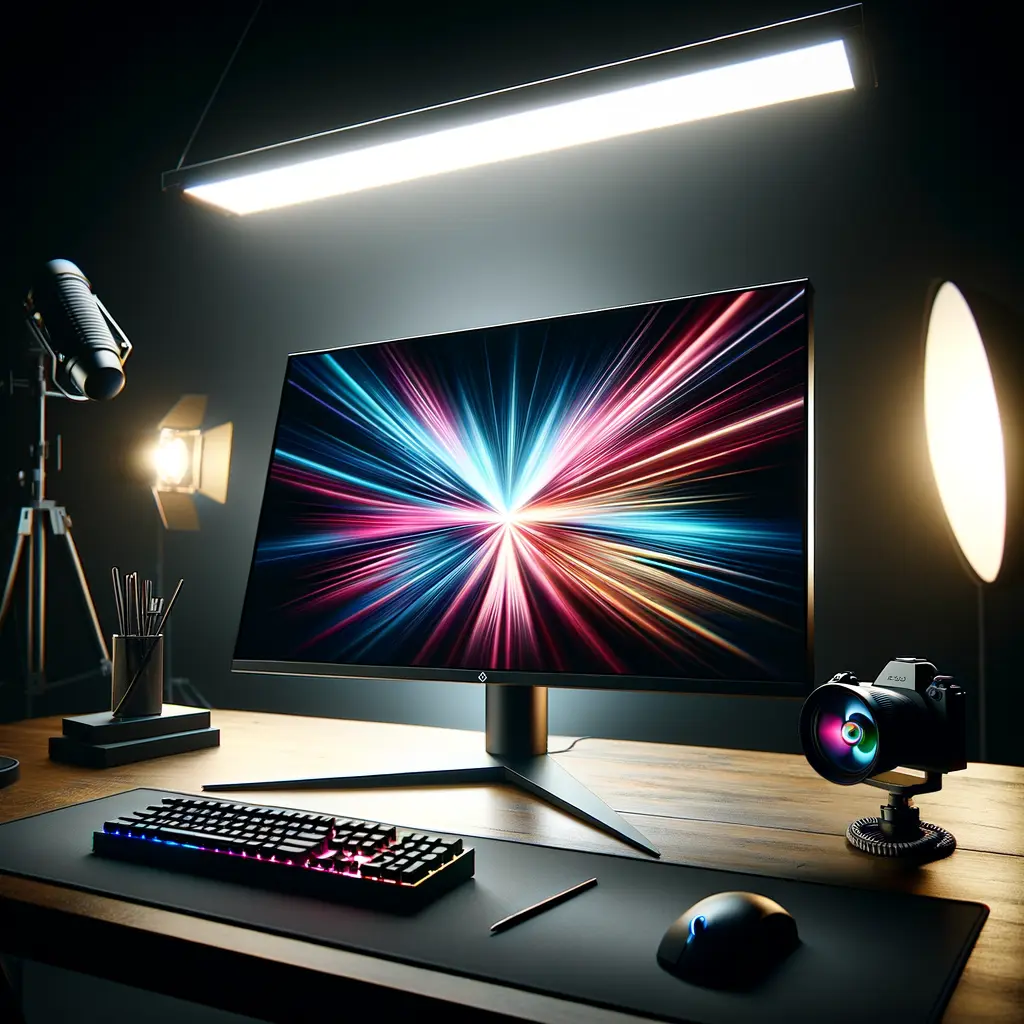
Headlining the Samsung 2026 Odyssey gaming monitors is the Odyssey G90X 32-inch flagship, internally codenamed “G90X Edge.” The panel delivers a stunning 6,016 × 3,384 resolution—roughly 6K—at a native 165 Hz. Samsung pairs that pixel count with an integrated infrared eye-tracking bar hidden in the bottom bezel. The system measures your gaze 120 times per second and subtly shifts parallax so each eye sees a slightly different image, creating a stereoscopic scene that pops off the screen without the need for glasses.
A new “Dual Mode” in the OSD allows the monitor to drop resolution to 3K while overclocking to 330 Hz for fast-twitch shooters. That versatility means you can edit 6K video during the day and crush opponents in Valorant at night—all on the same display. HDR True Black 600 certification, 1,500,000:1 contrast and 1 ms GtG response keep visuals crisp.
Connectivity is equally forward-looking: two DisplayPort 2.1 UHBR20 ports, HDMI 2.1 FRL 48 Gbps, a 90 W USB-C PD jack for laptop docking and a KVM switch. Both AMD FreeSync Premium Pro and NVIDIA G-SYNC Compatible are validated, ensuring tear-free motion.
Curious how Samsung’s Odyssey G90X 6K monitor compares with the legendary Odyssey G9? We have a side-by-side chart in our upcoming ultra-wide buyer’s guide—stay tuned.
Odyssey G6: 600 Hz Esports Powerhouse
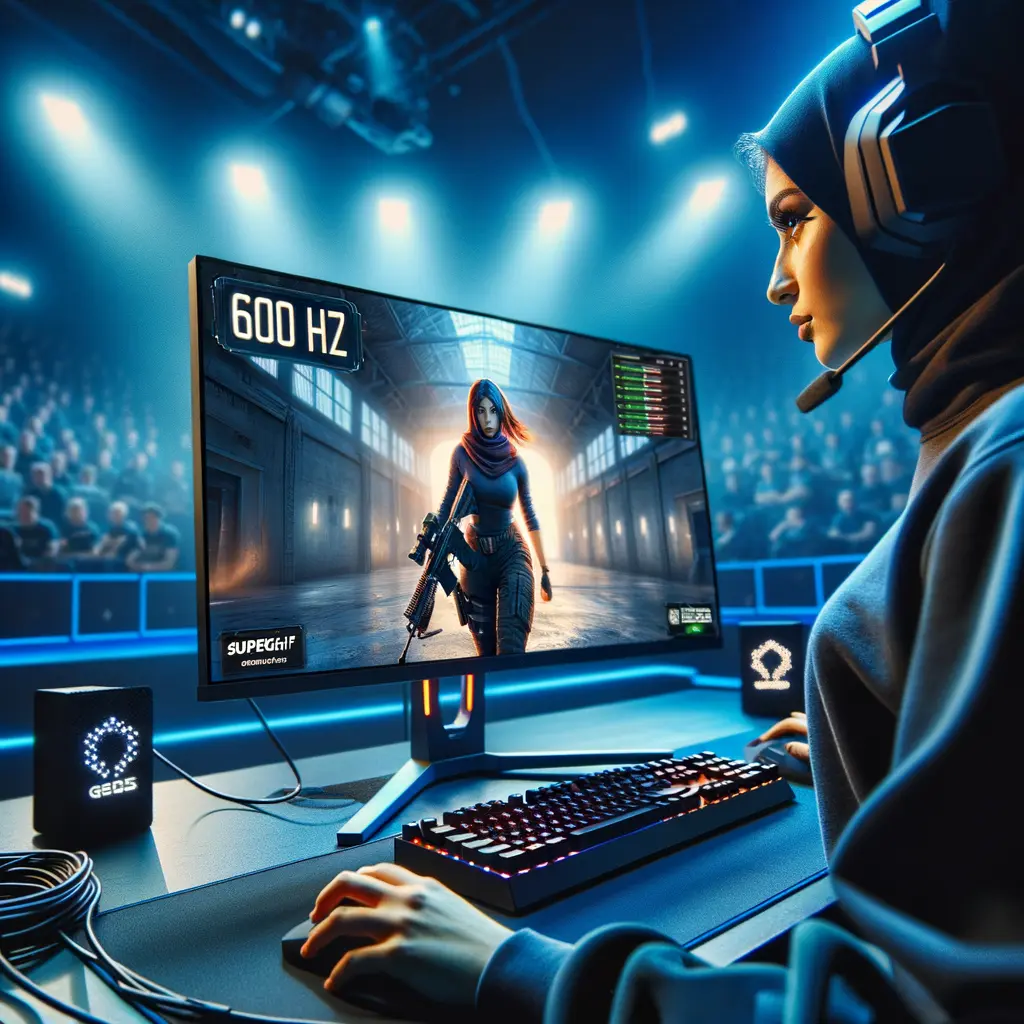
If your priority is raw speed, the Odyssey G6 27-inch model answers the call. Samsung engineers pushed its new Rapid IPS panel to an unprecedented 600 Hz in QHD mode, trumping even last year’s 500 Hz champions. Out of the box, QHD resolution runs at 240 Hz for daily tasks, but a single toggle in Samsung Game Bar unlocks the full 600 Hz overclock—validated with both FreeSync Premium and G-SYNC Compatible logos to eliminate tearing.
Pixel response times drop to 0.5 ms thanks to a high-drive voltage circuit, an essential figure for CS 2 and Overwatch 2 where every frame counts. Samsung claims the display covers 98% DCI-P3 with factory Delta-E <2 accuracy, so creators can comfortably colour-grade clips between matches. Cooling such a high-refresh panel is tricky, but Samsung’s rear honeycomb venting and graphene thermal pad dissipate heat silently. A height-adjustable, swivel-ready stand lets you rotate the screen into portrait for Twitch chat or code windows. RGB CoreSync lighting on the back can now sync with Razer Chroma devices automatically. Pros debating between the Odyssey G6 600Hz display and Alienware’s AW2725HF should read our esports monitor shoot-out being published next week. The conclusion may surprise you.
Odyssey G8 Family: Versatile 4K and 6K Options
Bridging the gap between flagship and esports specialist are three fresh Odyssey G8 variants, each tuned for a different sweet-spot scenario. Leading the trio is the 32-inch Odyssey G8 6K model, sharing the G90X’s 165 Hz native refresh and Dual Mode 300 Hz at 3K. Its slightly lower peak brightness (900 nits HDR) keeps cost manageable while still delivering exquisite detail for photo editing or single-player AAA adventures.
The second entry is the Odyssey G8 27-inch, which pursues pixel density above all else. Its 5K (5,120 × 2,880) canvas yields 218 ppi—Apple Studio Display territory—yet tops out at a robust 180 Hz, or 360 Hz when dropped to QHD. That makes it perfect for developers who code by day and race in iRacing by night.
Finally, the Odyssey G8 QD-OLED rounds things out with a 32-inch 4K 240 Hz panel. HDR True Black 500, infinite contrast and a reflex-driven 0.03 ms pixel response ensure deep blacks and razor-sharp motion. All three displays carry the latest CoreSync+ lighting ring, factory-calibrated sRGB mode and matte nano-texture to cut reflections.
Trying to decide which Odyssey G8 32-inch 6K SKU matches your RTX 4080 Super? Our upcoming compatibility chart breaks down VRAM use at every resolution.
Connectivity, HDR & Ecosystem Advantages
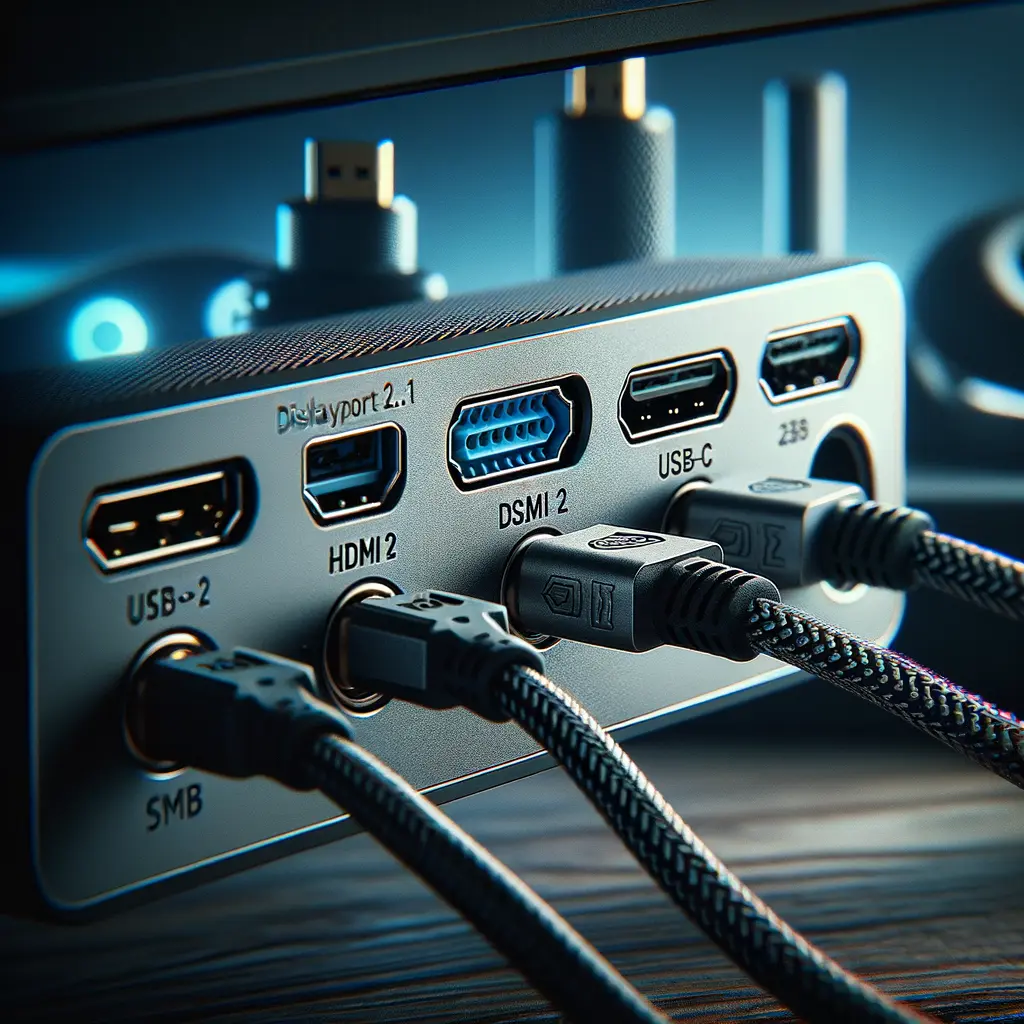
Beyond panel specs, Samsung 2026 Odyssey gaming monitors distinguish themselves with thoughtful I/O and ecosystem hooks. DisplayPort 2.1 UHBR20 moves 80 Gbps of bandwidth, enough to drive 6K at 165 Hz with 12-bit HDR, while HDMI 2.1 FRL 48 Gbps supports next-gen consoles at 4K 120 Hz. A built-in USB-C hub delivers 90 W Power Delivery, three 10 Gbps downstream ports and even an RJ-45 gigabit Ethernet jack that can act as a dock for gaming laptops.
HDR handling also leaps forward. All models meet or exceed VESA DisplayHDR True Black certifications, leveraging QD-OLED’s per-pixel dimming for near-infinite contrast. Samsung’s proprietary Neo Quantum Processor upgrades SDR content with real-time tone mapping—helpful if you binge anime that was never mastered in HDR.
CoreSync+ now ties into SmartThings. Turn on your Philips Hue lights when the monitor detects a game launch, or mute your Samsung soundbar automatically when you alt-tab into a conference call. Partnerships with Xbox Cloud Gaming and Amazon Luna mean the monitors can stream games natively over Wi-Fi using Samsung Gaming Hub—no PC required.
Want to understand how Wi-Fi 7 routers influence cloud-gaming latency? Read our networking explainer published earlier this month.
Should You Upgrade to Samsung 2026 Odyssey Gaming Monitors?
After examining each model, the central question remains: who should make the leap to Samsung 2026 Odyssey gaming monitors? If you value bleeding-edge specs and want to future-proof for at least three GPU generations, the Odyssey G90X 6K monitor offers unmatched versatility with its glasses-free 3D party trick. Competitive players who crave the lowest input latency will find the Odyssey G6 600Hz display a tangible advantage—especially in titles that can push triple-digit frame rates.
Creative professionals may gravitate toward the Odyssey G8 32-inch 6K for its balance of resolution, refresh rate and price, while the QD-OLED G8 variant excels at cinematic single-player experiences.
Price tags are still under wraps, but Samsung hinted at “G7-series 2024 MSRP plus 15 percent,” suggesting the G6 could start near US$699, with the G90X around US$1,499. Availability begins in Q2 2026, and pre-orders grant a three-month Xbox Game Pass Ultimate code.
For upgraders coming from a 144 Hz 1080p panel, the improvement in motion clarity, colour depth and HDR will be night and day. Those already on a recent 240 Hz QHD monitor might wait for hands-on reviews. We’ll publish detailed latency measurements and colour accuracy tests as soon as retail units arrive, so bookmark our monitor testing methodology page for the most objective numbers.
Either way, Samsung’s CES 2026 showcase proves the brand is doubling down on innovation and keeping real gamers—casual and pro alike—front and centre.