Inside the Geely CES 2026 Booth: First Look at the Zeekr 9X
The moment the doors opened at Geely’s sprawling CES 2026 stand, the Zeekr 9X drew an instant crowd. Camera flashes centered on its sleek profile, but the display’s true value came from the technology quietly surrounding the car. In this tour we step away from the glare to unpack the hardware and software that make the Zeekr 9X more than just a headline-grabbing nameplate. While many visitors waited in line to sit behind the wheel, engineers were on hand to talk through batteries, drive units and autonomous brains that will underpin Geely’s next chapter. That deeper story is what you’ll find here. Expect practical context, performance numbers and use-case examples rather than marketing slogans. Whether you’re a potential buyer, a fleet manager or simply an EV enthusiast, you’ll leave with a solid grasp of why the Zeekr 9X matters and how Geely CES 2026 announcements ripple across the wider electric-mobility landscape. We’ll also point you toward related coverage of Geely’s SEA architecture and previous Zeekr launches so you can dig further. Buckle up for a six-section breakdown that keeps the Zeekr 9X front and center while shining a light on every supporting innovation.

Next-Gen Short Blade LFP Battery Packs: Faster, Denser, Longer-Lasting
Battery tech took top billing at Geely CES 2026, and for good reason. Engineers showcased three versions of the short blade LFP battery that will power not only the Zeekr 9X but future plug-in hybrids and full EVs across the group. The first variant focuses on durability: think 4,500 charge–discharge cycles tailored to daily fluctuations in a plug-in hybrid’s state of charge. The second, nicknamed the “Golden Battery,” introduces a mylar separator that gives each cell its striking hue while enabling a blistering 12 C charge rate. Real-world translation? A 10–80 % refill in roughly seven minutes on a high-power DC post. Owners who prioritize road-trip convenience over everything else will gravitate here. Finally, the slightly longer prismatic format ratchets energy density up to an impressive 192 Wh kg⁻¹—remarkable for an LFP chemistry traditionally seen as an affordability play. By nudging toward the 200 Wh kg⁻¹ threshold, Geely inches closer to nickel-rich pack performance without sacrificing thermal stability or cost advantages. Expect the Zeekr 9X to mix and match these chemistries depending on trim, allowing buyers to choose between maximum range, ultra-fast charging, or extended cycle life. As with all three packs, cell-to-pack integration reduces wiring complexity and pushes volumetric efficiency higher than previous Geely modules.
The 11-in-1 Electric Drive Unit: Compact Muscle for Dual- and Tri-Motor Builds
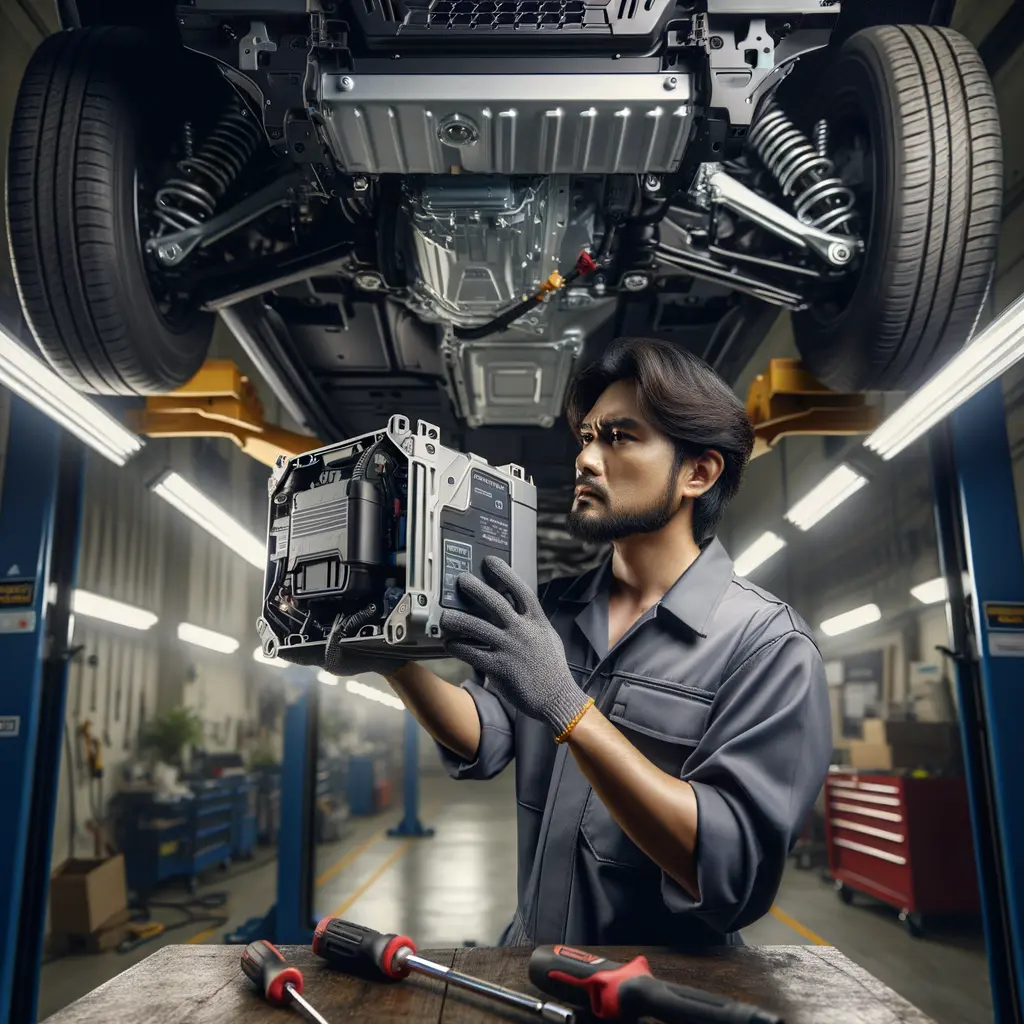
Underneath the Zeekr 9X’s sculpted floorpan sits Geely’s new 11-in-1 electric drive unit, a component that merges inverter, motor controller, onboard charger and eight additional subsystems into a single magnesium-alloy housing. Consolidation slashes cabling runs, trims 15 kg of mass and streamlines production—critical when scaling volumes after Geely CES 2026. Two versions debut: a 400 V unit aimed at mainstream models and a 900 V powerhouse destined for the Zeekr 9X tri-motor flagship. In tri-motor guise, a 2-liter turbo-assisted front axle partners with a stand-alone rear e-motor to deliver e-all-wheel-drive torque on demand. Engineers demonstrated a party trick dubbed the “Waltz Turn,” where front and rear motors spin opposite directions to pivot the vehicle in place—handy for tight urban parking, though probably a tire salesman’s dream. For performance metrics, expect the 900 V variant to exceed 300 kW on the rear axle alone, with peak torque available from 0 rpm. Cooling channels are printed directly into the stator jacket, improving heat rejection during repeated acceleration runs or continuous highway driving. The modular architecture also lets smaller Geely brands bolt the 11-in-1 electric drive unit into front-wheel-drive platforms without major redesign, unlocking economies of scale that reach well beyond the Zeekr 9X spotlight.
H9 Autonomous Platform: Dual Nvidia Drive Thor Chips, Five LiDARs and 4D Radar
Autonomy moved from buzzword to tangible hardware at Geely CES 2026 with the reveal of the H9 domain controller. Housed in a polished aluminum enclosure, the computer pairs two Nvidia Drive Thor SoCs for a combined 1,400 TOPS—nearly triple the compute headroom many Level-3 competitors field today. Feeding those chips is a multi-modal sensor array: a roof-mounted long-range LiDAR plus four smaller corner units, five 4D millimeter-wave radars, a dozen high-resolution optical cameras and a forward-facing infrared thermal imager. The latter detects warm-blooded pedestrians or wildlife even in zero-lux conditions, adding redundancy when optical sensors struggle. Data-fusion algorithms running on Nvidia Drive Thor carve out drivable space, predict trajectories and handle lane changes or obstacle avoidance in real time. Over-the-air updates will iterate features much like smartphone firmware, a capability Geely first piloted on earlier Zeekr 001 models. For developers, an open API exposes sensor streams to third-party mapping partners, an approach reminiscent of Android’s early openness—a strategy that could accelerate regional-specific feature rollouts. In practical terms, Zeekr 9X owners can expect hands-off navigation on controlled-access highways shortly after launch, with city-street support following certification. Those keen on ADAS comparisons may want to review our breakdown of Tesla FSD Beta versus Xpeng’s XNGP programs for additional context.

Real-World Gains: What Zeekr 9X Tech Means for Drivers and Fleets
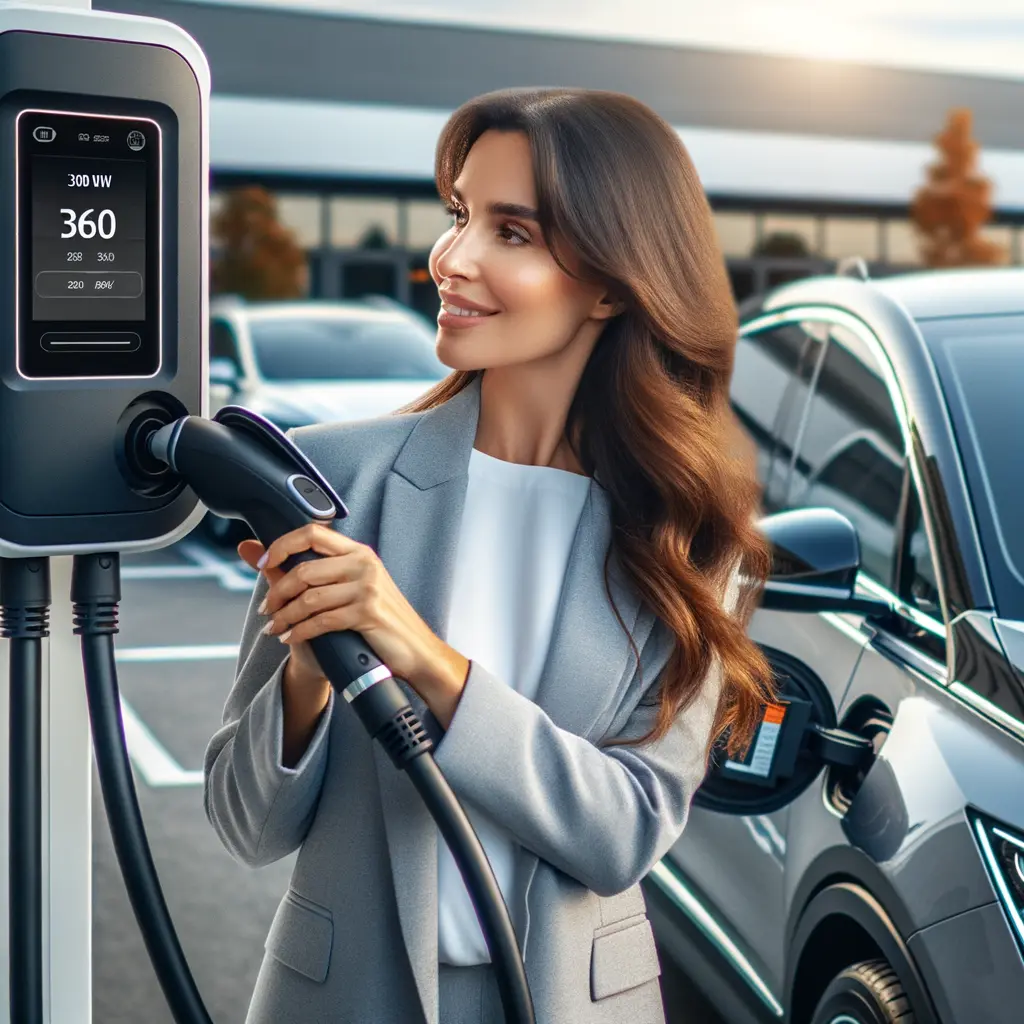
Spec sheets matter, but day-to-day benefits seal the deal. Start with charging: a seven-minute 10–80 % session on a 360 kW post minimises driver downtime and keeps fleet utilization high. Trucking companies exploring last-mile electrification can now schedule near-diesel turnarounds while enjoying lower total cost of ownership. Battery longevity is another perk. The plug-in hybrid-grade short blade LFP battery delivers 4,500 cycles, translating to well over 300,000 km before noticeable degradation—ideal for ride-hailing operations that rack up miles quickly. On the performance front, the Zeekr 9X tri-motor variant rockets from 0–100 km h⁻¹ in an estimated 3.5 s, yet its 11-in-1 electric drive unit’s integrated onboard charger keeps AC charging hardware simple in home garages. Safety advances are equally compelling. Five LiDARs create a 360-degree depth map that remains effective in heavy rain, a scenario where camera-only systems can falter. Thermal imaging further reduces night-time collision risk, a statistic that insurance providers watch closely. Businesses looking to electrify would do well to compare these metrics against existing Geely models like the Geometry C or the commercial-grade Farizon hometruck, topics we explore in separate articles. For individual owners, over-the-air feature drops promise that today’s Zeekr 9X will feel fresh long after purchase.
Conclusion: Why the Zeekr 9X Stole the Show at Geely CES 2026
Walking away from the Geely CES 2026 booth, it’s clear the Zeekr 9X isn’t just another shiny concept—it’s a rolling showcase of production-ready technology. From the versatile short blade LFP battery family to the space-saving 11-in-1 electric drive unit and the powerhouse H9 autonomous stack, each component represents a thoughtful leap rather than a marketing flourish. For consumers, that translates into faster charging, more range options, lower running costs and tangible safety upgrades. For the industry, Geely’s decision to open APIs and leverage Nvidia Drive Thor hints at a collaborative future where third-party software enriches factory hardware. The Zeekr 9X appears ready to serve as a halo model that pulls Geely sub-brands toward higher voltage architectures and accelerated over-the-air development cycles. As CES visitors discovered, the real excitement lay not just in sitting inside the Zeekr 9X but in understanding the layers of innovation beneath its sculpted panels. We’ll continue tracking certification milestones, regional launch dates and early owner feedback in our ongoing coverage. Until then, one fact is certain: the Zeekr 9X has cemented itself as the flagship of Geely CES 2026 and set a high bar for every EV yet to debut this decade.