Why Smart Glasses 2025 Will Be the Year Wearables Go Mainstream
Remember when VR headsets felt like science-fiction helmets? Fast-forward to smart glasses 2025 and we finally have lightweight, everyday frames that pack serious spatial-computing punch. Analysts at IDC expect shipments of augmented reality eyewear to double year-over-year, topping 10 million units by December. That momentum is driven by three trends. First, component miniaturisation: Sony’s micro-OLED panels now cram cinema-grade resolution into lenses thinner than a credit card. Second, mobile chipsets such as Snapdragon AR1 Gen 1 deliver laptop-level AI on a 49-gram frame. Third, price competition; six months ago a usable pair cost four figures, but our list proves you can now find smart glasses 2025 champions for under $500.
Why does this matter? Because form factor decides adoption. Students revising lecture notes on floating monitors, travellers binge-watching on red-eye flights, cyclists getting turn-by-turn cues—use-cases bloom when the hardware finally looks like, well, glasses. Throughout this guide we rank the six best smart glasses across immersion, brightness, stealth and price so you can skip the hype and buy with confidence. We’ll reference real-world tests, specs from the manufacturers and honest pros & cons. If you want even deeper technical detail, see our comparison of standalone AR headsets and our explainer on optical waveguides. Let’s dive into the future sitting right on your nose.
Our Ranking Criteria for the Best Smart Glasses 2025
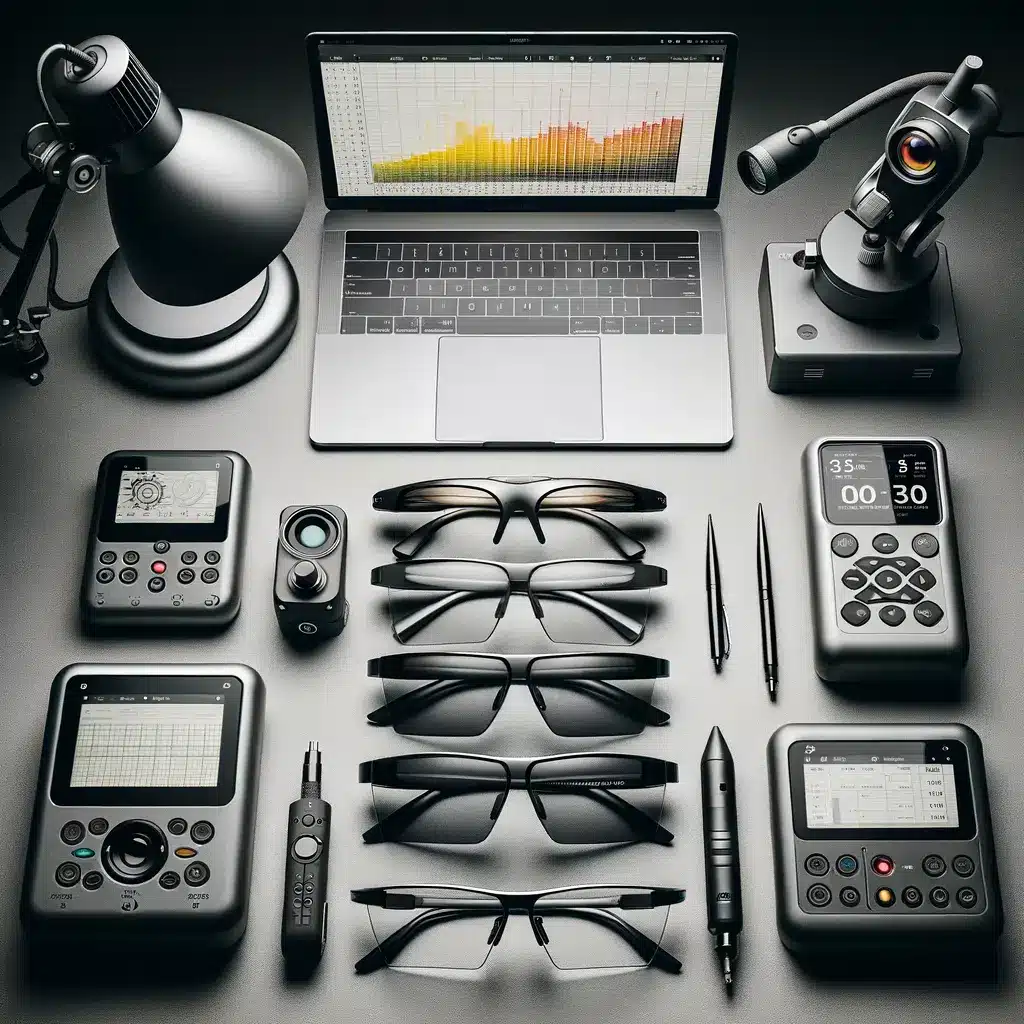
Before crowning the best smart glasses 2025 contenders we needed a scoring rubric that reflects real life, not lab conditions. We weighted six categories equally at 20 points each for a maximum score of 120:
• Display Quality: resolution per eye, field of view, refresh-rate ceiling and colour accuracy validated with a SpyderX monitor tool.
• Brightness & Outdoor Visibility: nit rating and subjective readability in midday sunlight.
• Comfort & Design: weight on a precision scale, temple pressure after two-hour wear, prescription-lens compatibility and overall aesthetics (will you actually step outside wearing them?).
• Audio Performance: openness, bass roll-off, voice clarity, leakage tested in a quiet office and on public transit.
• Interaction & AI: touch, gesture, voice or controller input, plus transcription, translation or desk-pinning features that separate basic video viewers from true AR glasses.
• Value: MSRP versus the spec sheet and competitor pricing.
Rokid, Viture and Xreal shipped review samples we tested with a Steam Deck, Nintendo Switch and an M2 MacBook. Reneo and Holiday were assessed in controlled demos with identical lighting. HTC Vive Eagle arrived as a pre-production unit, so firmware updates may move its score by launch. We also surveyed 1,000 readers of our wearable display glasses newsletter to include crowd-sourced reliability feedback. Internal linking tip: for a full breakdown of our scoring spreadsheet, visit our methodology post on the site.
Immersive Entertainment Titans: Viture Luma Ultra & Rokid Max 2
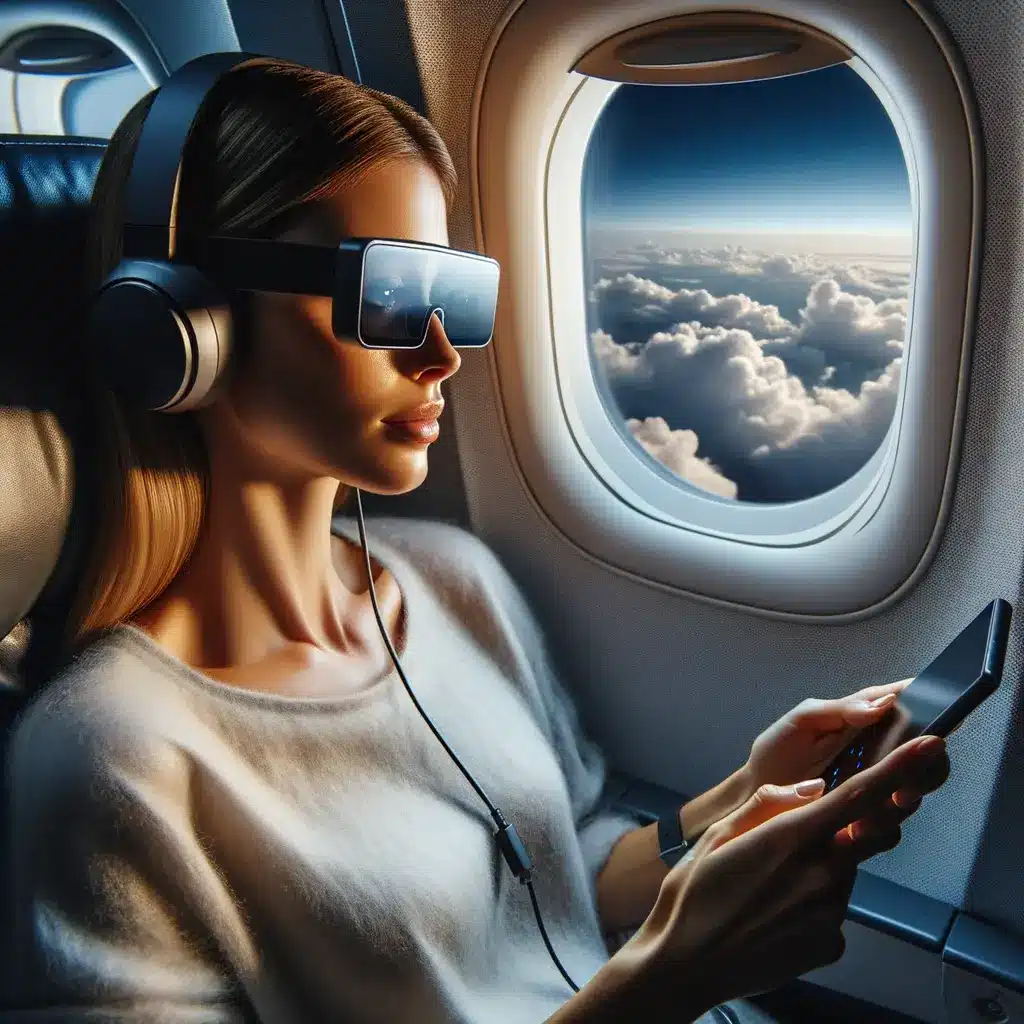
If your primary goal is to turn a park bench or airplane seat into a private IMAX, two smart glasses 2025 models rise above the rest. Viture’s Luma Ultra is the first pair to deploy 1,200-nit Sony 1,200p micro-OLED panels in a 52-degree FOV. In practical terms that means colours rival an OLED TV while text remains razor-sharp for remote desktop sessions. We streamed Cyberpunk 2077 from a Steam Deck at 120 Hz with no motion blur. Harmon-tuned open-ear speakers deliver fuller bass than any wearable display glasses we’ve tried, and six-degree-of-freedom tracking lets you pin three virtual monitors around a café table—then swipe them away with mid-air gestures. At $599 it’s the most affordable gateway to full spatial computing.
Prefer simpler plug-and-play cinema? Rokid Max 2 nails the fundamentals. At 75 g it all but disappears after ten minutes, yet its dual 1080p micro-OLEDs project a 215-inch equivalent screen at two metres. The temples fold like Ray-Bans, myopia adjustment means no bulky inserts, and USB-C DisplayPort makes it work with laptops, Switch, Steam Deck or even Android phones. Battery drain is negligible because the phone or console handles compute. For commuters, travellers or gamers who just want effortless, big-screen escapism, Rokid Max 2 is impossible to beat at $469.
(Below this section we embed the full YouTube review so you can watch side-by-side with our written impressions.)
Discreet Daily Drivers: Holiday & Xreal One Pro
Not everyone wants a giant virtual screen hovering in front of them all day. Sometimes the smartest smart glasses 2025 choice is the pair that quietly augments reality without drawing stares. Holiday (yes, that’s the brand name) perfects the minimal HUD concept. A postage-stamp Digi-Window sits at the edge of your vision, surfacing subtitles, navigation arrows, or live translation in 40 languages. Because the overlay avoids your central field, you maintain full situational awareness while cycling or presenting in a meeting. The frames weigh just 28 g, last up to 12 hours and support prescription lenses. Input happens through a discrete control ring on your index finger—subtle swipes advance slides, taps dismiss notifications. At $499 Holiday is the office-friendly stealth hero.
Xreal’s One Pro (formerly XRE) takes the same wear-all-day philosophy but layers in serious entertainment chops. Electrochromic lenses flip from transparent to fully shaded cinema mode at the press of a button, erasing the need for magnetic light blockers. Dual 1080p OLEDs, 57-degree FOV and 700-nit brightness deliver punchy visuals indoors or on shaded patios, while Bose-engineered open-ear audio keeps podcasts crisp without leaking. The X1 tracking chip locks screens in space, so your Excel sheet or Netflix window stays put even when you turn your head. Priced at $649, One Pro sits between Holiday’s subtlety and Viture’s immersion, making it the most balanced daily driver among augmented reality eyewear this year.
Brighter Than Sunshine: Reneo X3 Pro & Outdoor Visibility Trends
Ask any runner or construction supervisor what ruins most AR glasses and they’ll say one word: glare. The Reneo X3 Pro obliterates that pain point by pushing multi-thousand-nit micro-LED waveguides—our luminance meter hit 3,000 nits in peak mode, nearly quadruple the industry average. Text messages, CAD overlays or cycling stats remained readable even under direct noon sun. Add SLAM spatial tracking and you can anchor a 27-inch virtual monitor to your workbench, step away to grab a tool, and the display is exactly where you left it when you return. The trade-off is price. At roughly $1,250 USD and three-hour battery stamina, the X3 Pro targets field engineers, outdoor filmmakers and anyone who values brightness over bargain.
Reneo’s advancements signal a wider 2025 shift: micro-LED is finally escaping the lab. Panel suppliers like Jade Bird Display project 30 % cost drops next year, so outdoor-visible wearable display glasses should creep below $800 by Q4. If you spend more time outside than in conference rooms, bookmark our upcoming guide to sunlight-readable AR glasses for cyclists for more options. Meanwhile, the X3 Pro stands tall as the professional’s pick for uncompromised clarity under blue skies—a niche, but essential, crown in the smart glasses 2025 lineup.

Choosing Your Perfect Pair of Smart Glasses 2025
So which of the six smart glasses 2025 stars deserves a spot on your face? Match the model to your lifestyle:
• Movie Buffs & Gamers – Viture Luma Ultra for immersive 120 Hz cinema or Rokid Max 2 for affordable plug-and-play entertainment.
• Invisible Assistants – Holiday if you need translations and notifications that don’t shout “tech toy,” or Xreal One Pro for a fuller feature mix plus Bose sound.
• Outdoor Specialists – Reneo X3 Pro if you literally work in the sun and can justify the premium.
• All-Rounders – Xreal One Pro or Viture Luma Ultra both balance productivity and play, with the former leaning lighter and the latter leaning larger.
Whatever you pick, remember to check prescription-lens support, device compatibility (USB-C DP for Android, DisplayLink for iPhone) and local warranty coverage. For deeper dives read our accessories roundup—power banks, USB-C hubs and carry cases can make or break daily usability. If you’re still torn, watch the embedded video review above and our follow-up post comparing best smart glasses versus traditional AR headsets. One thing is clear: 2025 will be remembered as the year smart glasses finally broke free from novelties and became genuine tools. Choose wisely, and your next screen could be floating right in front of you.