
Meet the Samsung Galaxy Z TriFold: A New Chapter in Foldables
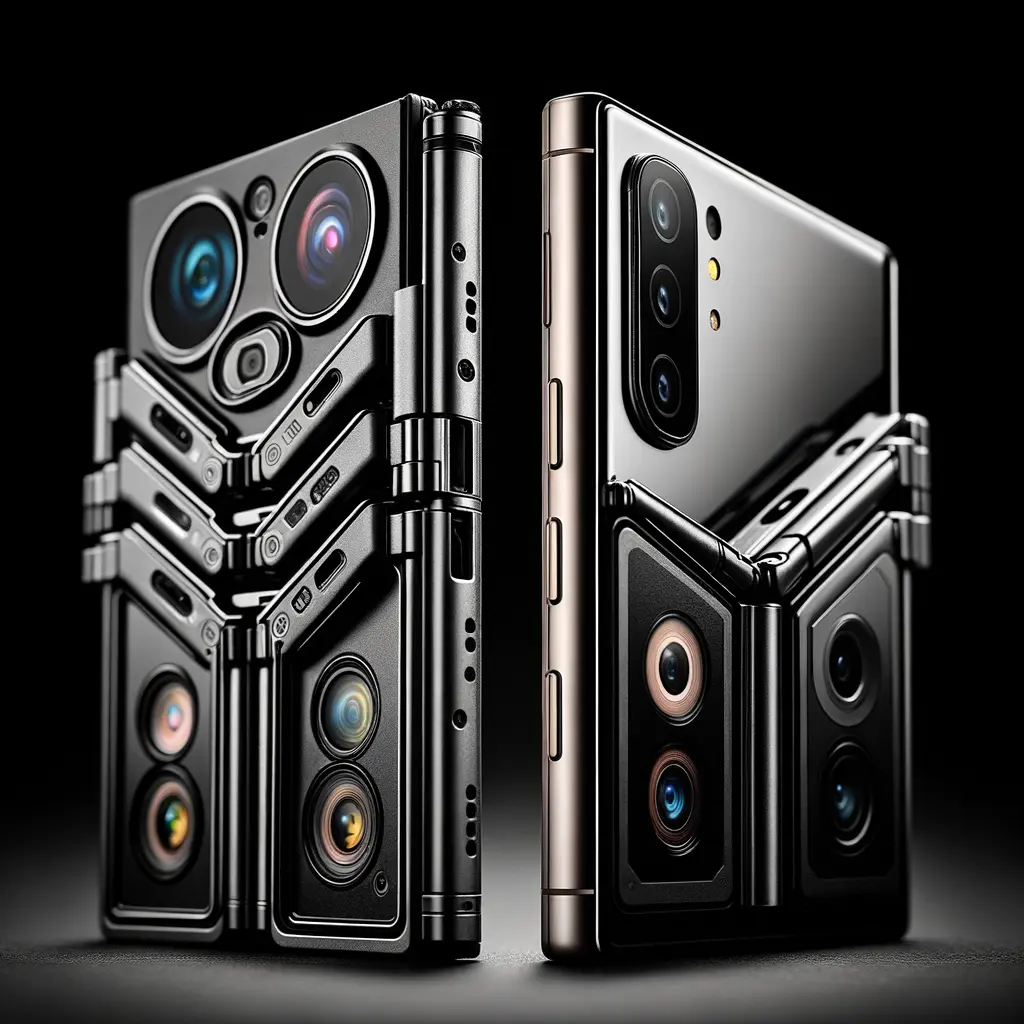
For years, Samsung has led the charge in bendable displays, but the Samsung Galaxy Z TriFold pushes the idea further than any foldable phone review we have published to date. Instead of a single hinge, this flagship employs a clever tri-segment design that lets the 6.4-inch front screen blossom into a full 10-inch tablet—then disappear back into your pocket. In practice, that means one device can replace both your everyday smartphone and your weekend binge-watch slate. After two solid weeks living with the TriFold, its benefits (and quirks) have come into sharp focus. Yes, it is heavier and thicker than a conventional handset, but the added bulk brings a larger battery, improved thermals, and an aspect ratio that feels tailor-made for streaming. During testing, I racked up more than eight hours of screen-on time—nearly matching the Galaxy S25 Ultra despite the bigger canvas. Beyond the specs, what struck me most is how normal the phone feels when closed. The outer AMOLED stays bright outdoors, the hinge resists wobble, and One UI 7 transitions smoothly between folded and unfolded layouts. If you have followed our earlier piece on the Fold5 durability upgrades, you will appreciate the tougher UTG layer here. In short, the Samsung Galaxy Z TriFold lands as a credible daily driver rather than a fragile tech demo, and that alone makes it worth a closer look.

Why the Samsung Galaxy Z TriFold Redefines Portability
Slide the TriFold into a jeans pocket and you are carrying a legitimate 10-inch Android tablet without a bag or sleeve. That single trick has enormous day-to-day impact. Commuting on a train? Unfold once and you gain a cinematic 16:10 panel that finally eliminates the black bars plaguing squarer foldables. Killing time in a coffee shop? Fold back up and the device occupies no more space than a thick power bank. During my hands-on, I streamed an entire Chicago Bears game on NFL+ at 1080p, and the experience felt closer to a living-room TV than to any phone screen. Colors popped, HDR support kicked in, and the dual speakers had enough volume to cut through background chatter.
Gamers may reap even bigger rewards. Titles like Genshin Impact or Turret Escape scale naturally to the expanded real estate, giving your thumbs room to breathe and keeping on-screen UI from crowding the action. Paired with a Backbone One controller, the Samsung Galaxy Z TriFold becomes a pocket console—and thanks to the Snapdragon 8 Gen 4 chip, frame rates stay locked at 60 fps. The hinge is sturdy enough to prop the screen tent-style, turning any tray table into an impromptu gaming dock. All of this makes the TriFold a compelling answer for readers who asked in our mobile gaming on foldable roundup whether a single device could juggle phone calls and AAA titles. Evidently, it can.

Entertainment & Multitasking: Triple the Screen, Triple the Fun
Samsung’s latest One UI lets you drag three apps into a tri-pane layout—perfect for watching YouTube, scrolling X, and monitoring Discord all at once. On conventional phones that sounds chaotic; on a 10-inch canvas it feels logical. I pulled up a large YouTube window on the left, split the right side between Threads and Telegram, and still had readable text at arm’s length. If you thrive on productivity hacks, check our internal guide to One UI 7 multitasking tricks for more advanced setups.
The entertainment upside is equally strong. Netflix episodes fill the panel edge-to-edge thanks to the more rectangular shape, and brightness tops 1,800 nits, so glare is rarely a concern. The anti-reflective factory screen protector helps outdoors, though my unit began peeling after two weeks. Samsung says replacements will be free during the first year, but it’s worth noting for prospective buyers.
Mobile gaming on foldable hardware often melts batteries, yet the TriFold eked out nearly four hours of Genshin with performance mode enabled before dipping below 20 percent. That longevity stems from a generous 6,000 mAh cell—larger than the Z Fold 7’s pack. For more longevity tips, see our battery-saving primer for foldables. Watch my full hands-on impressions in the embedded video below to see these features in action.
Productivity Superpowers: Native Samsung Dex on Phone
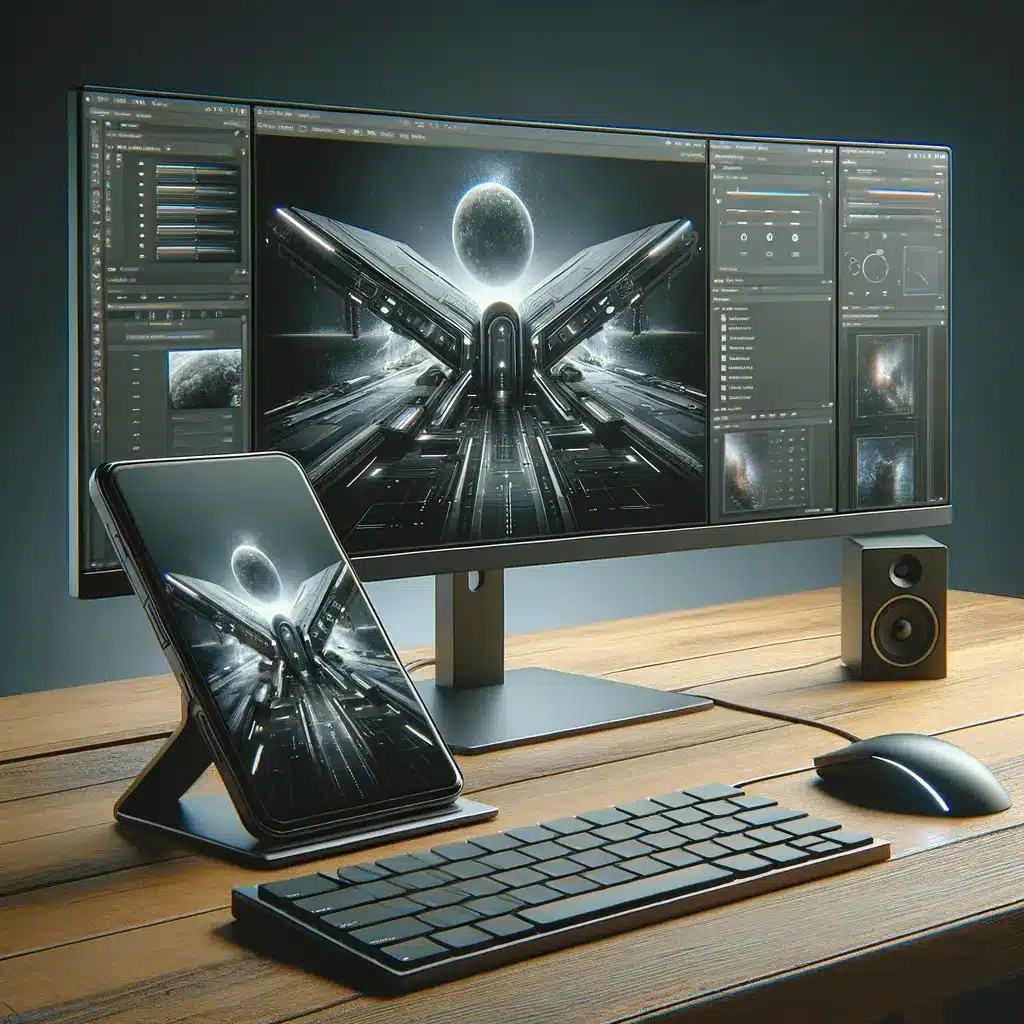
The headline feature for power users is undoubtedly native Samsung Dex on phone—something no earlier handset delivered on its built-in display. Tap the Dex toggle and the interface flips into a desktop-style workspace with floating windows, a resizable taskbar, and conventional right-click menus. I paired a Logitech MX Keys and MX Anywhere 3S via Bluetooth, then connected a 27-inch Dell QHD monitor over USB-C. Instantly, the TriFold acted as a second screen for Slack while the external monitor handled Chrome and Lightroom. Lag was negligible; even 20-megapixel RAW edits felt fluid.
Students will appreciate that Dex also functions in standalone mode. Prop the device with a kickstand case, attach a foldable Bluetooth keyboard, and you have a lightweight writing rig for lecture halls. I drafted 1,200 words in Google Docs without once yearning for a laptop. Samsung has optimized thermal dissipation across the tri-segment spine, so the chassis never became uncomfortably warm.
Of course, the experience is not flawless. A handful of apps—Instagram Reels, some banking utilities—still refuse to scale correctly, leaving black columns or stretched content. We covered work-arounds in our piece on essential Dex utilities, but developers need to catch up. Even so, the TriFold’s combination of pocketability and true desktop mode hands it a productivity edge that conventional slabs cannot match.
Performance, Battery, Cameras & The $2,900 Question
Inside, the Samsung Galaxy Z TriFold runs the same Snapdragon 8 Gen 4 found in the S25 Ultra, so benchmarks are unsurprisingly stellar: 2,120 single-core and 6,780 multi-core in Geekbench 6. Real-world usage backs up the numbers. App launches are instantaneous, 4K video exports complete 18 percent faster than on the Z Fold 7, and Wi-Fi 7 peaks at 3.4 Gbps in compatible routers.
Battery endurance proved the biggest surprise. An eight-app mixed workload—Slack, Chrome, Spotify, Lightroom, Gmail, TikTok, Google Maps, and a 30-minute YouTube stream—left me with 37 percent after a 14-hour day. Super Fast Charging brings the 6,000 mAh cell from 0 to 65 percent in 30 minutes using Samsung’s 45 W brick.
Where the TriFold trails the S25 Ultra is imaging. You get the familiar 200 MP primary sensor, but the telephoto shooters are a step down, offering 3× optical rather than 5× and 10×. Daylight photos remain crisp; low-light shots introduce more noise. If photography tops your list, see our camera comparison between the TriFold and S25 Ultra for sample galleries.
Then comes the Galaxy TriFold price: an eye-watering $2,899. For that sum you could buy an S25 Ultra and a Tab S11 Ultra together. Samsung’s pitch is that paying once for a hybrid simplifies life—and it does—but early adopters will shoulder the premium. Expect holiday trade-in deals to soften the blow later in the year.
Should You Buy the Samsung Galaxy Z TriFold?
After living with the Samsung Galaxy Z TriFold, I can say the form factor finally feels mainstream-ready. Build quality is solid, battery life is impressive, and Samsung Dex on phone turns the device into a pocket workstation. The drawbacks—heft, thickness, mid-tier zoom cameras, and lack of S Pen support—are real but not deal-breaking. For creatives who sketch, the missing stylus may be the only true show-stopper.
So, who should spend nearly three grand on this foldable phone review superstar? Road-warrior professionals tired of juggling phone, tablet, and laptop will reap the most value. A student or casual user, on the other hand, might do better pairing an S25 Ultra with the Tab S9 FE and still save money. As always, weigh your workflow. If you crave laptop-like multitasking in a device that still fits a pocket, the TriFold stands alone.
Samsung tends to iterate quickly, so a second-generation model could iron out camera compromises and add S Pen support. Until then, the current TriFold remains a bold statement piece that doubles as your daily driver and portable theater. For further reading, explore our durability test of Samsung’s Ultra Thin Glass and our guide to choosing the best cases for foldables. Ultimately, the Samsung Galaxy Z TriFold proves that the future of mobile computing can indeed fold three ways—and for some, that future starts now.