Why the iPhone Fold Marks a New Era for Apple
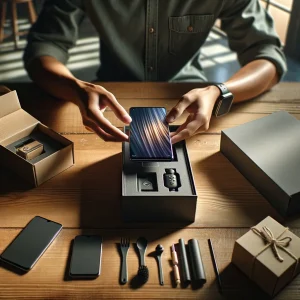
The iPhone Fold is more than another yearly upgrade—it represents Apple’s first real step into a brand-new product category since AirPods and Apple Watch. Unlike incremental camera bumps or chip refreshes, the iPhone Fold introduces a book-style hinge that transforms a pocket-sized device into a mini-tablet. That ability to shift screen real estate at will is what has analysts claiming the iPhone Fold will change everything. Apple has reportedly waited years for display durability to reach its strict standards, and the result is rumored to be a near-creaseless OLED panel. With Samsung now on its seventh-generation Fold and Google, Motorola, and OPPO refining their own concepts, the market is mature enough for Apple to pounce. Early leaks point to a 5.4-inch external screen that unfolds into roughly 7.8 inches—think iPhone mini on the outside, iPad mini on the inside. If Apple delivers its trademark polish, the iPhone Fold could finally push foldables into the mainstream, much like the original iPhone did for touchscreens. Expect Apple’s ecosystem advantages—iCloud continuity, iMessage, and App Store depth—to draw curious Android foldable owners as well. (For background, see our post on how Apple times technology adoption.)

Maturing Foldable Market Sets the Stage for Apple Foldable Phone
Foldables are no longer experimental. Samsung’s Galaxy Z Fold 7, Google’s Pixel Fold, and OPPO’s Find N6 have proved consumers will pay premium prices for devices that multitask as phones and tablets. Market research firm IDC projects foldable shipments will hit 48 million units by 2026, a five-fold jump from 2022. A key driver is technological improvement: flexible OLED layers now last over 200,000 folds, hinges resist dust intrusion, and newer chemistries allow stylus support. OPPO’s ‘water-drop’ hinge, for instance, almost eliminates the crease—a feature Apple is rumored to adopt in the iPhone Fold. Meanwhile, component costs have fallen 20 percent in two years, letting brands experiment with aggressive launch pricing. Carriers add fuel through multi-year financing that hides sticker shock. All of this primes the public for an Apple foldable phone. Historically, Apple enters once components stabilize and consumer expectations are set—remember how the iPad arrived after netbooks hit their stride? The same playbook is unfolding here. When the iPhone Fold lands, competitors will have educated buyers, but Apple’s brand trust and tight hardware-software integration could tip the scales. Curious how other brands price their models? Check our comparison of Fold 7 vs Pixel Fold.

iPhone Fold Design: Book-Style Form Meets Premium Build
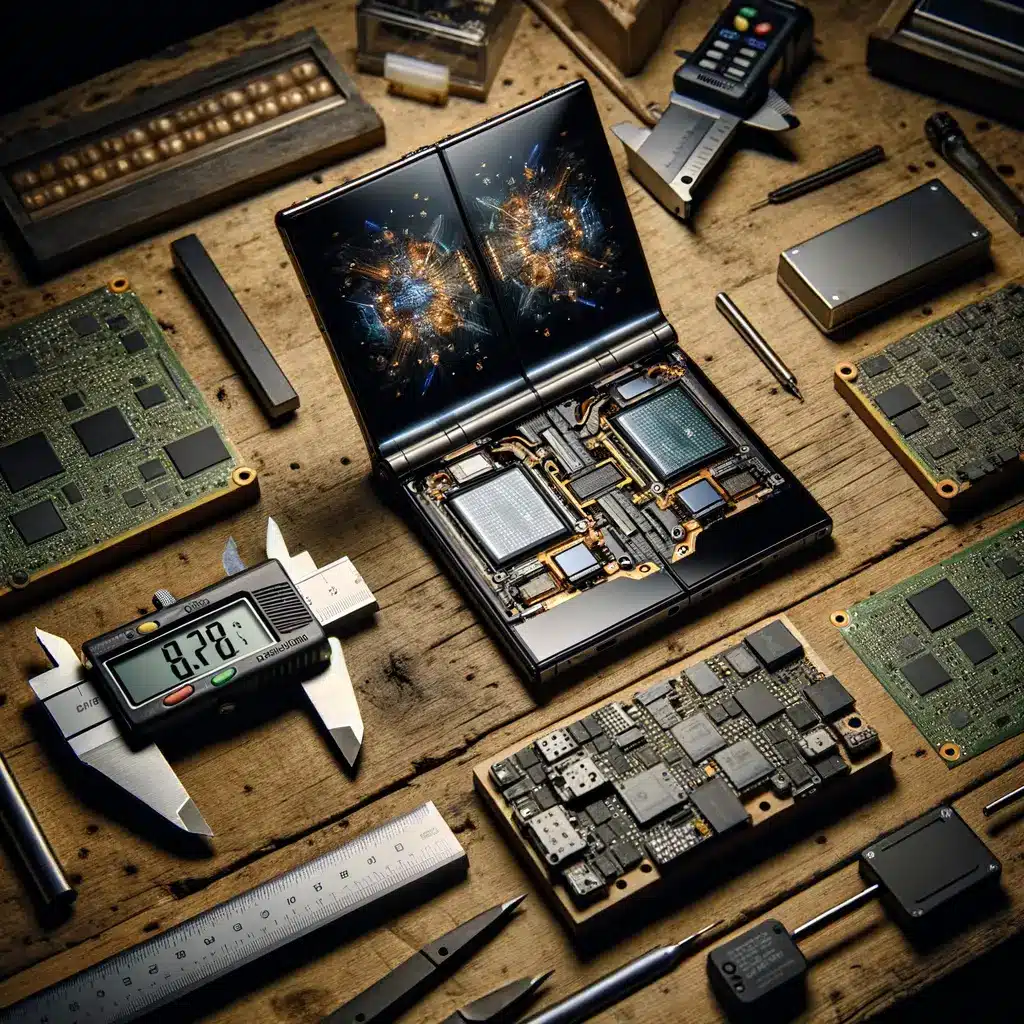
Leaked CAD files show Apple favoring a passport-sized, book-style design rather than a tall ‘hot-dog’ Fold. Closed, the iPhone Fold should feel like a thicker but shorter iPhone mini, sporting a 5.4-inch 19:9 external OLED that supports 120 Hz ProMotion. Open it and a 7.8-inch nearly square display appears—ideal for reading magazines, annotating PDFs, or previewing 4K video timelines. Apple’s choice of aerospace-grade aluminum or possibly titanium rails keeps weight manageable despite the dual-battery layout needed on each side of the hinge. Speaking of the hinge, expect a multi-stop gear mechanism similar to Microsoft’s Surface Duo 2 but reinforced with stainless-steel pins for longevity. Rumors suggest Apple’s display partner BOE will supply an ultra-thin glass layer topped with a proprietary hard-coat finish, making the crease 35 percent shallower than Samsung’s. Camera modules remain flagship-level: a triple-lens array with periscope zoom sits on the rear, while selfies default to a 12 MP sensor above the outer screen. Inside, Apple may drop Face ID for a Touch ID sensor integrated into the side power button—freeing the inner panel from notches or Dynamic Islands. The iPhone Fold keyword shines here as Apple balances familiar industrial design with transformative flexibility.
Hardware & Performance: iPhone Fold Specs That Matter
Under the hood, the iPhone Fold packs serious horsepower. Most insiders believe Apple will ship the device with the 3-nanometer A19 Pro chipset, featuring a 10-core CPU and 12 GB of unified memory. That silicon already powers the iPhone 17 Pro, so developers can optimize apps ahead of launch—key for a first-generation form factor. Storage tiers are slated to begin at 256 GB and top out at 1 TB, matching Pro iPhones. Dual batteries—one in each half—should combine for around 5,000 mAh, enough to offset the larger canvas while maintaining all-day endurance. Apple’s efficiency gains could let the iPhone Fold hit 13 hours of mixed-use screen-on time in early tests. On connectivity, Wi-Fi 7, Bluetooth 5.4, and mmWave 5G remain on the spec sheet, plus a UWB 2 chip for precise spatial tracking—handy if Apple eventually supports Vision Pro hand-off. Thermal design is equally ambitious: vapor-chamber cooling spreads heat across both halves, avoiding hot spots near the hinge. For creators, the rear camera array offers 48 MP wide, 12 MP ultra-wide, and 12 MP 5× tetraprism zoom, all benefiting from Apple’s Photonic Engine. Whether you’re shooting ProRes or editing in LumaFusion, the iPhone Fold specs aim to keep pace. Want to understand how the A19 Pro stacks up to M-series chips? Dive into our detailed silicon breakdown for power users.
Software Experience: How iOS Could Evolve on a Foldable iPhone
Great hardware is wasted without software that exploits it, and Apple knows it. Insiders say a custom build dubbed “iOS Fold” will ship on the iPhone Fold, retaining familiar SpringBoard icons on the outer display while dynamically morphing when you unfold. Think of it as a bridge between iOS 17 and iPadOS 17: a persistent dock emerges along the bottom, and Split View allows two full iPhone apps side by side. Drag-and-drop content will work just like on an iPad mini, and Picture-in-Picture video can hover anywhere. Early code leaks reference a ‘Canvas’ API that lets developers detect hinge angle and re-flow UI—so a recipe app can park ingredients on one side and instructions on the other. Apple Pencil support is unlikely in version one, but rumblings of hover gestures suggest future potential. Multitasking aside, continuity remains front and center: unfold during a FaceTime call and cameras automatically switch; hand off Safari tabs to a nearby MacBook Neo with one tap. Widgets can fill the entire inner screen for at-a-glance productivity dashboards. If you’re curious how Apple perfected multitasking on the iPad first, check our timeline of iOS feature evolution. All told, software will determine whether the iPhone Fold becomes indispensable or just a flashy gadget.

Pricing, Availability & Final Thoughts on the iPhone Fold
Apple is expected to unveil the iPhone Fold alongside the iPhone 18 lineup in September, with a staggered shipment window that could slip into November or December—mirroring how the iPhone X launched after the iPhone 8. Industry sources peg base pricing around $1,999 in the U.S., climbing to roughly $2,499 for the 1 TB configuration. While that sticker shocks, carrier installment plans spread over 36 months will make the Apple foldable phone comparable to a high-end iPhone Pro Max plus an iPad mini combined. Pre-orders will provide Apple critical demand signals; low volumes mean early adopters enjoy exclusivity, high volumes could accelerate a second-generation model. In the bigger picture, the iPhone Fold signals Apple’s long-game convergence of iOS, iPadOS, and macOS, where the only question becomes screen size, not software. If execution matches the hype—crease-less display, robust hinge, thoughtful software—the iPhone Fold may mainstream foldables the way AirPods mainstreamed wireless earbuds. For Apple fans weighing an upgrade, consider reading our guide on trading in older devices for maximum value. Ultimately, the iPhone Fold delivers a compelling two-in-one proposition and is poised to rewrite what we expect from a smartphone in 2025.