Why the iPhone Fold Matters: A New Era for Apple
Apple rarely rushes into a brand-new product category, and that makes the iPhone Fold one of the most intriguing launches on the horizon. After watching Samsung, Google and Motorola refine their own book-style devices for years, Apple’s upcoming entry signals that foldables have finally reached mainstream maturity. Early supply-chain data shows Cupertino ordering roughly 22 million OLED panels from Samsung Display—clear evidence that we’re not dealing with a small-batch prototype but a mass-market push. The iPhone Fold will test whether Apple’s ecosystem strength can convert cautious iPhone owners into early adopters of a $2,000-plus handset.
From a user-experience perspective, the primary attraction is a device that transforms from a familiar 6-inch smartphone into an almost-tablet with a single motion. If Apple nails the crease-free 7.8-inch panel, the iPhone Fold could finally deliver on the promise that earlier Android foldables only hinted at—true iPad-like productivity in your pocket. Throughout this article we’ll unpack every credible leak: the foldable iPhone release date window, hardware highlights such as the 2-nm A20 chip, and the projected iPhone Fold price. We’ll also compare Apple’s strategy to rivals and suggest related reads, like our in-depth look at Apple Vision Pro’s spatial ecosystem and our iPhone 15 Pro Max camera review. Buckle up; the iPhone Fold story is just getting started.

Release Timeline: From Rumor Mill to Reality
When can you actually hold an iPhone Fold? Industry watchers place the launch squarely between late 2026 and early 2027, syncing with the iPhone 18 Pro cycle. Apple insider Ming-Chi Kuo claims the project is running behind schedule because of early-stage manufacturing hurdles reminiscent of the iPhone X ramp-up in 2017. Unlike typical iPhone assembly, building a foldable requires ultra-thin glass, complex hinge tolerances and dual-battery architecture—all at scale.
Apple’s conservative approach—”wait, watch and refine”—could pay dividends. By 2026, hybrid OLED technology that sandwiches rigid glass with flexible plastic will be on its third generation, promising far fewer creases than the Galaxy Z Fold series suffered early on. Suppliers such as Samsung Display and LG Innotek are reportedly co-developing liquid-metal hinges capable of withstanding 300,000 folds. Even so, analysts are tempering shipment forecasts from 10 million to roughly 6–8 million units for the first year, an echo of Apple Watch Gen 1 scarcity.
If you’re tracking key dates, keep an eye on Apple’s September events: that’s historically when new form factors debut. Should problems persist, an April-style spring event like the original iPad launch is Cupertino’s fallback. For more context on Apple’s product-development cadence, see our timeline of Apple Silicon transitions—a helpful internal reference.

Design & Display: Crease-Free 7.8-Inch Brilliance
Forget clamshell nostalgia; Apple is betting on a book-style layout with a 4:3 aspect ratio when unfolded—a smart move to eliminate the black bars that plague most foldables during video playback. Leaked CAD files show the device measuring a slim 5.64 mm when open, beating even the iPhone Air’s record thinness. Closed, it’s a manageable 11 mm, comparable to a standard wallet.
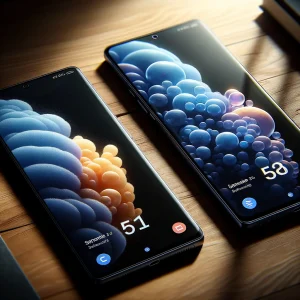
The external 5.5-inch panel sports 460 ppi for uncompromised clarity, while the inside expands to 7.8 inches—nearly identical to an iPad mini. Apple’s secret sauce is Samsung’s hybrid OLED paired with pressure-dispersing metal plates; together they flatten the typical hinge bulge and virtually erase the center crease. Rumors suggest Face ID may give way to Side-button Touch ID to conserve internal volume, echoing Apple’s iPad mini 6 design. Dual hole-punch selfie cams and perhaps an under-display 24-MP sensor round out the futuristic look.
Below this paragraph is where we’ll embed the full YouTube breakdown (ID 4gUiUG8BRG0) so you can see every rumored angle in motion. After watching, continue to Section 4 for a deep dive into the silicon, cameras and connectivity that will power this foldable marvel.
Under the Hood: A20 Chip, C2 Modem & Pro-Level Cameras
Powering two displays requires serious silicon, and Apple’s answer is the 2-nanometer A20 chip fabricated by TSMC. Early Geekbench leaks hint at a 30 % CPU uplift and 25 % better GPU efficiency versus the upcoming A19—critical for multitasking across the inner and outer screens. Accompanying the SoC is Apple’s C2 modem, finally adding millimeter-wave 5G to Cupertino’s in-house radio lineup. Expect download speeds rivalling Qualcomm’s X75 while sipping less power thanks to tighter integration.
Camera hardware receives an overdue megapixel bump: dual 40-MP rear sensors with computational photography tuned for both portrait and landscape orientations, plus a 24-MP under-display selfie shooter. Apple’s image-signal processor will need to compensate for softness introduced by the OLED matrix overlaying that front camera—an area where Samsung and ZTE stumbled early.
Battery life remains the wild card. Sources talk about a two-cell 4,800 mAh design split by the hinge, paired with stacked PCB technology to save space. Fast charging could rise to 35 W wired and 20 W MagSafe, finally matching competitors. For readers wanting more on Apple silicon roadmaps, refer to our explainer on the M3 family and how its efficiency lessons leak down to iPhone chips—an internal link worth exploring.

Sticker Shock or Smart Investment? Pricing & Market Impact
At an estimated $2,100–$2,300, the iPhone Fold price comfortably eclipses Samsung’s Galaxy Z Fold 7 ($1,799) and Google’s Pixel 10 Pro Fold ($1,799). Why would anyone pay the Cupertino premium? History offers clues: Apple normalized $999 phones with the iPhone X, $3,499 headsets with Vision Pro and $349 earbuds with AirPods Max. The iPhone Fold could follow the same path, leveraging ecosystem stickiness—iCloud backup, AirDrop, Apple Pay—to justify the cost.
Manufacturing efficiencies may play a role. Ming-Chi Kuo says hinge costs have dropped to $70–$80, below the $100–$120 consensus. If Apple chooses not to pass those savings along, gross margin stays fat; if it does, the retail price could inch closer to $1,999, triggering a psychological advantage under the $2K barrier.
Market analysts at IDC forecast 30 % year-over-year growth for foldables once Apple joins the fray, pushing category shipments to nearly 50 million units by 2027. Competitors are already adjusting: Samsung’s rumored “Wide-Fold” mimics Apple’s 4:3 aspect, while OnePlus and Xiaomi each tease sub-$1,500 models to protect share. Check out our companion article on Galaxy Z Fold 8 rumors for a deeper competitive lens.

Final Thoughts: Will the iPhone Fold Redefine Mobile Computing?
The iPhone Fold represents Apple’s boldest hardware gamble since the original iPhone in 2007. If it ships on schedule, consumers will finally choose between a traditional slab and a pocket-sized tablet that unfolds on demand. Early signs suggest Apple will deliver a crease-free display, A-series horsepower and seamless iOS-iPadOS integration—all wrapped in the premium design language fans expect. The big unknown is whether the wider public is ready to pay premium prices for a form factor that’s still proving itself.
From an ecosystem standpoint, the iPhone Fold could streamline device arsenals: imagine leaving your iPad mini at home because your phone already handles split-screen spreadsheets and Apple Pencil annotations. Developers will flock to optimize apps once a foldable iPhone user base exists, much as they did when the first iPad launched.
If you’re tracking Apple foldable phone news, bookmark this blog; we’ll update it as supply-chain reports firm up. Meanwhile, explore our guides to iPhone Fold specs, Apple foldable phone patents, and our freshly posted Apple Watch 10 preview for additional context.
Ultimately, the iPhone Fold will answer one question: can Apple once again redefine how we interact with mobile technology? Time—and consumer wallets—will tell. Until then, keep an eye on every iPhone Fold leak, because the next two years promise to be the most exciting in smartphone history.