Welcome to the AI Smart Home Revolution at CES 2026
CES 2026 made one thing clear: the AI smart home is no longer a futuristic concept—it’s here, and it has a name: Hey Tuya. Walking onto Tuya’s sprawling booth you immediately sense that the company has moved beyond isolated smart plugs and color-changing bulbs. Instead, every light, appliance, camera and sensor is treated as part of one continuous nervous system, powered by large-language-model reasoning that understands context, habits and goals. Want the living-room lamps at 40 % when the sun dips below the horizon and your smartwatch says your heart-rate variability is low? Hey Tuya adjusts them automatically. Forgot to lock the back door? The platform notices the motion pattern, pings your phone and locks it for you. That holistic mindset is why Hey Tuya has been dubbed “the brain of the AI smart home.” Over the next sections we’ll break down the safety, wellness, productivity and pet-care demos that stole the show, and look at how the Tuya smart home platform lets makers add the same intelligence to everything from thermostats to toothbrushes. If you’re mapping out your own smart-home roadmap—or helping clients design one—keep reading, then see our deep-dive on Matter compatibility for deeper context.
Putting a Brain in Your House: How Hey Tuya Works
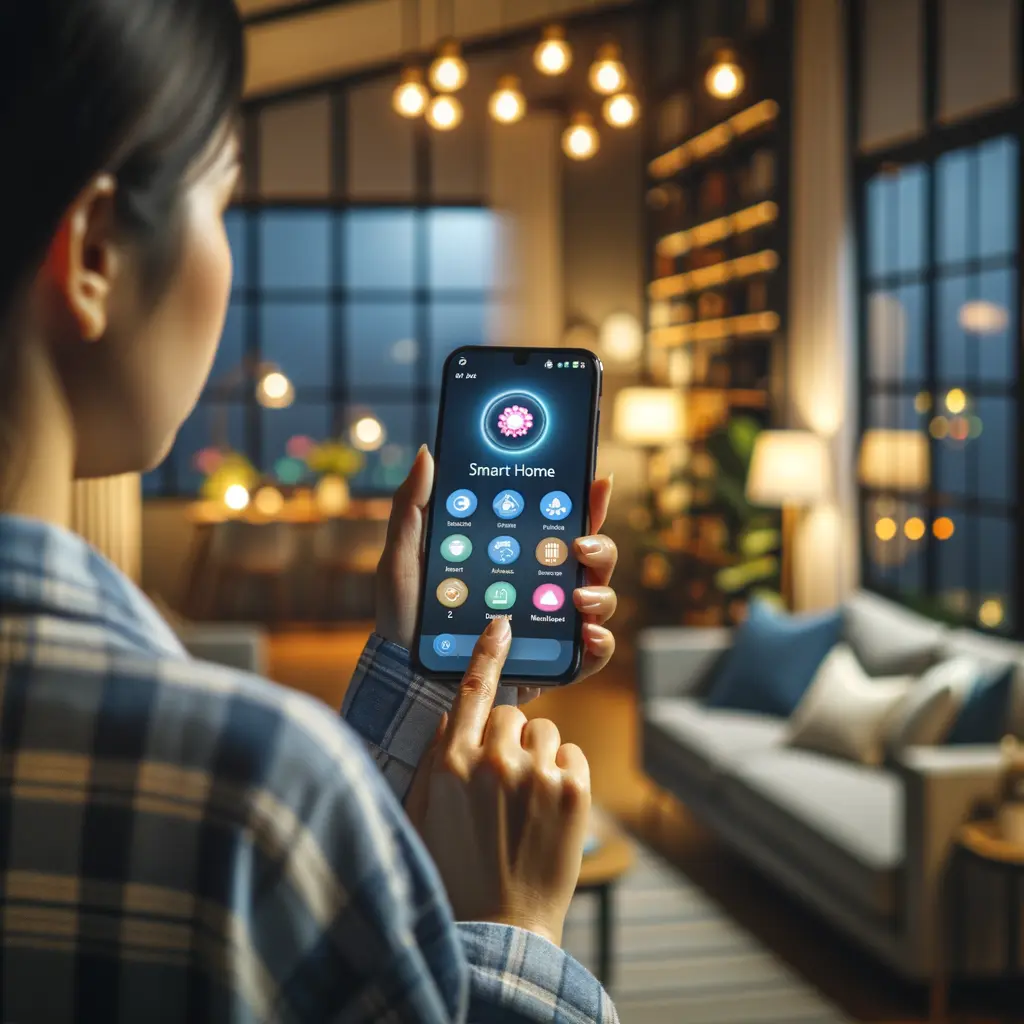
The secret to Hey Tuya’s “brain” is an on-device and cloud fusion of speech, vision and sensor data that runs on the Tuya smart home platform. Instead of forcing users to remember cumbersome app menus, the Hey Tuya AI assistant allows you to talk or type naturally—“Turn on all lights” or “Show me the patio camera from 3 p.m.” The large-language model parses intent, identifies which of the 8,000+ supported device categories are relevant, and issues commands in milliseconds. At the edge, ESP32, Nordic and MediaTek chips handle local automations for low latency; in the cloud, Tuya’s graph database keeps track of rooms, schedules and energy profiles.
During the demo Gavin from Tuya fired up kitchen lights, queued pet-monitor footage, and generated a multi-room energy report—all from a single chat window. Because the system understands relationships (“kitchen lights belong to downstairs,” “patio camera feeds into security mode”), scenes can be chained together without writing a single line of code. For installers, that means fewer support calls; for families, it means the house adapts to routines rather than the other way around. If you’re still juggling three different apps for lighting, security and HVAC, check our guide on consolidating hubs—Hey Tuya shows what’s possible when everything speaks the same language in an AI smart home.
Personalised Wellness: Health & Fitness Intelligence
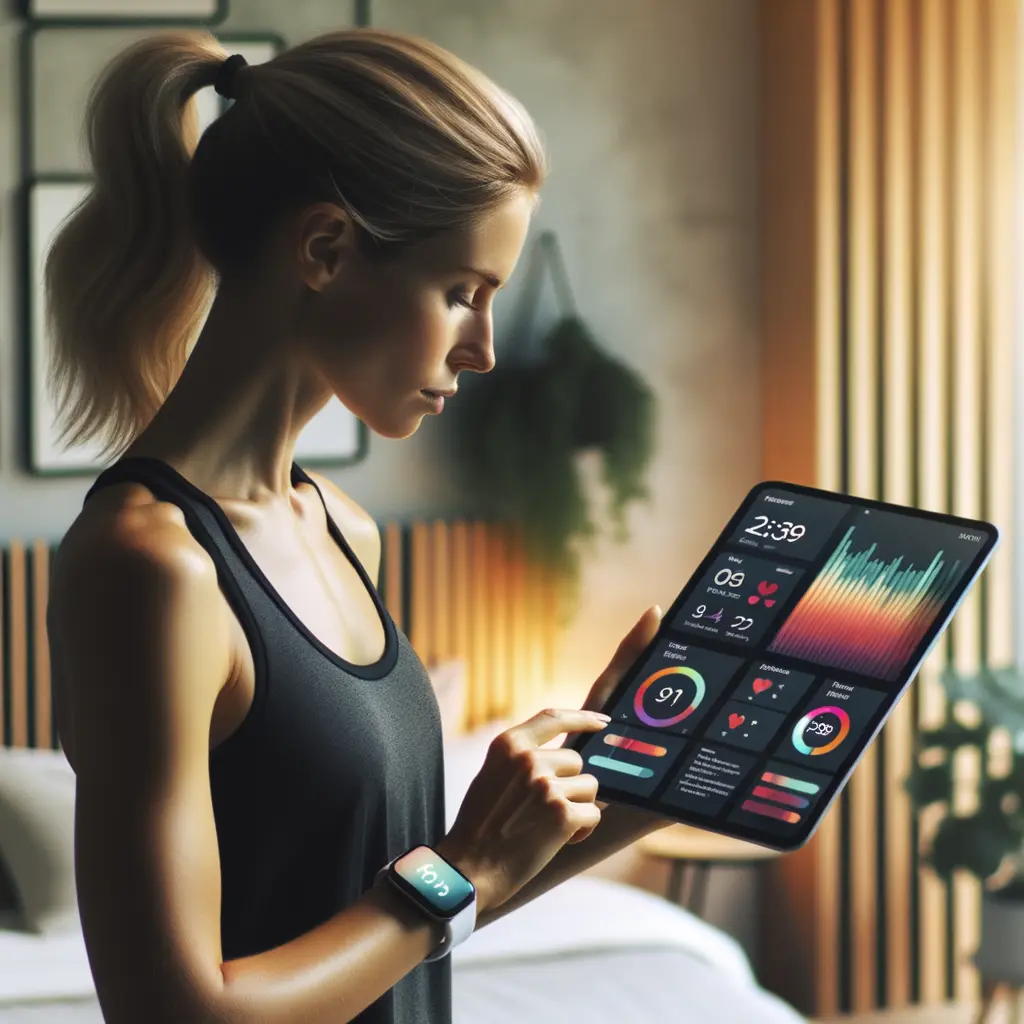
Hey Tuya’s wellness dashboard proves that an AI smart home isn’t only about convenience—it can actively protect and improve your health. The platform integrates data from Tuya-powered smartwatches, rings and Wi-Fi scales, then fuses those streams with environmental metrics such as bedroom temperature and air quality. The result is a personalised intelligence layer that serves up actionable insights rather than raw numbers. Ask “How was my sleep last week?” and the Hey Tuya AI assistant replies with a coloured chart, a quality score, and suggestions like “Shift bedtime 20 minutes earlier” or “Enable white-noise scene when decibel levels exceed 40 dB.”
What impressed us at CES 2026 was the predictive element. By correlating resting heart-rate trends with accelerated HVAC cycles, the system can flag the early onset of a cold or heightened stress, prompting you to activate the recovery-lighting scene or start a guided-breathing session on the living-room TV. All processing complies with Tuya’s GDPR-grade encryption, so sensitive biometrics remain private. Fitness professionals who run remote-coaching programs will appreciate the API hooks that let them pull anonymised client stats directly into their dashboards. For more ideas, read our tutorial on creating Matter-based wellness automations that sync with Apple Health and Google Fit.
AI Companions, Translation & Efficiency: Life Management Reimagined
Beyond home control and wellness, Tuya showcased a suite of productivity features branded “AI Efficiency.” Need real-time translation while negotiating with a supplier? Scan a QR code on the Hey Tuya screen and simultaneous interpretation streams to your handset. Struggling to remember family tasks? Dictate “Hey Tuya, add dentist appointment for Maya next Tuesday” and a synchronised to-do list appears on your smart fridge, phone and watch.
The same conversational engine powers the AI companion mode—a friendly chatbot that can summarise morning news, explain homework or simply keep seniors company. Everything is multimodal: text, voice and vision. Point the phone at a mysterious plant and “AI Lens” identifies it, then suggests watering intervals. During the demonstration the assistant diarised booth meetings, filed sticky notes into Notion and drafted follow-up emails—all without leaving the Tuya smart home platform. That frictionless flow is why creators and busy parents flocked to the booth.
If you’re evaluating other digital assistants, compare Hey Tuya’s no-code workflow with Alexa Blueprints or Google Home Routines; the difference in setup time is staggering. With a few plain-English sentences, your AI smart home becomes your day planner, translator and knowledge base.

Aura the AI Pet Robot: Caring for Furry Friends
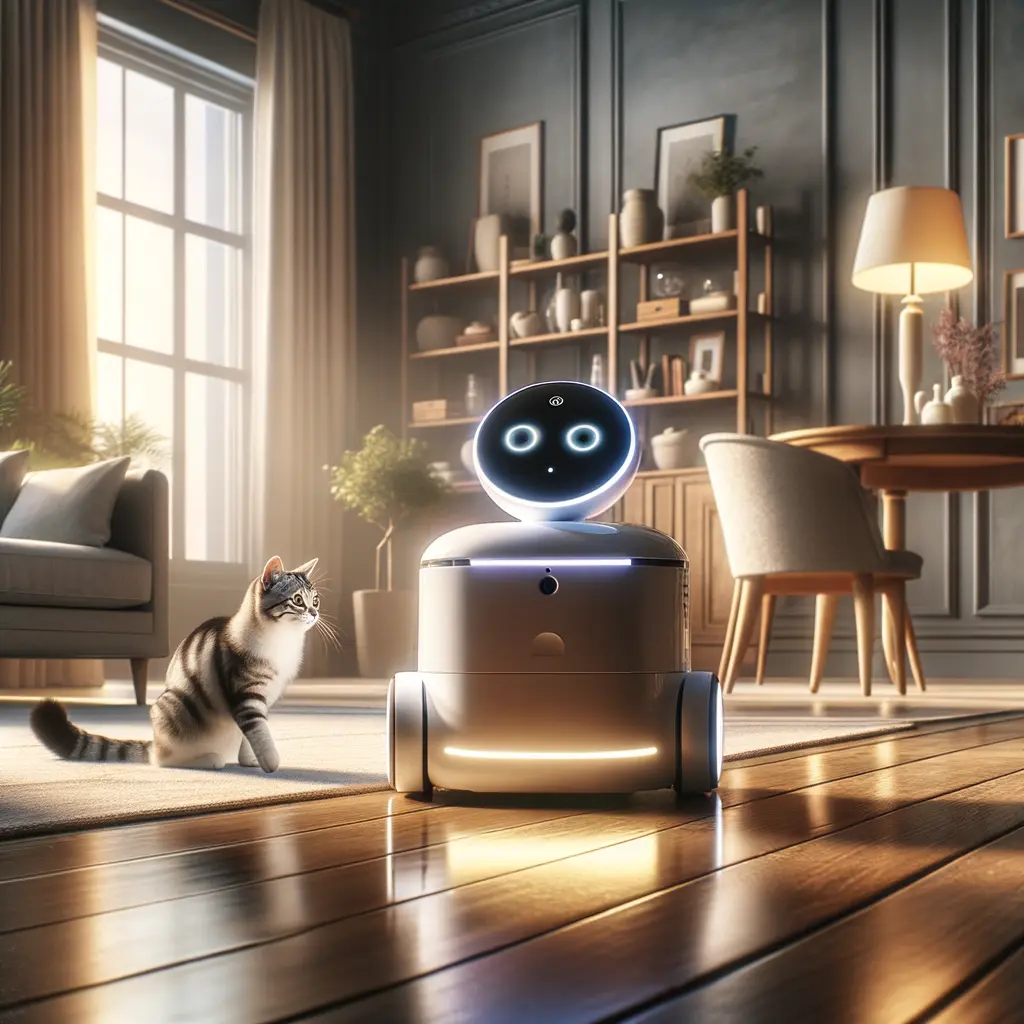
Pets weren’t left out of the CES spotlight. Aura, Tuya’s AI pet robot, had attendees lining up for selfies—and for good reason. Roughly the size of a compact vacuum, Aura roams your house autonomously, mapping rooms with SLAM vision, avoiding chair legs and dog toys while keeping a watchful eye on four-legged residents. Its dual-camera array differentiates between cats, dogs and furniture, allowing the robot to trigger play sessions when boredom behaviour is detected or dispense treats when positive reinforcement is warranted.
What elevates Aura above novelty status is its deep integration with the Tuya smart home platform. If the indoor temperature drops below your pet’s comfort zone the bot can signal the HVAC to raise the heat in a designated “comfort corner,” which it also warms with an embedded heating pad. Laser-pointer mode entertains restless kittens, while the onboard microphones capture barks or meows and convert them into notifications—handy for owners who worry while at work. Each evening Aura even edits the day’s cutest moments into a 30-second video you can post straight to social media.
For households already using Tuya cameras, Aura becomes a mobile extension of the security grid. Pair it with our recommended Zigbee pet-door sensors and you have a seamless safety cocoon that benefits every family member inside an AI smart home.
Open Development & What’s Next for the AI Smart Home
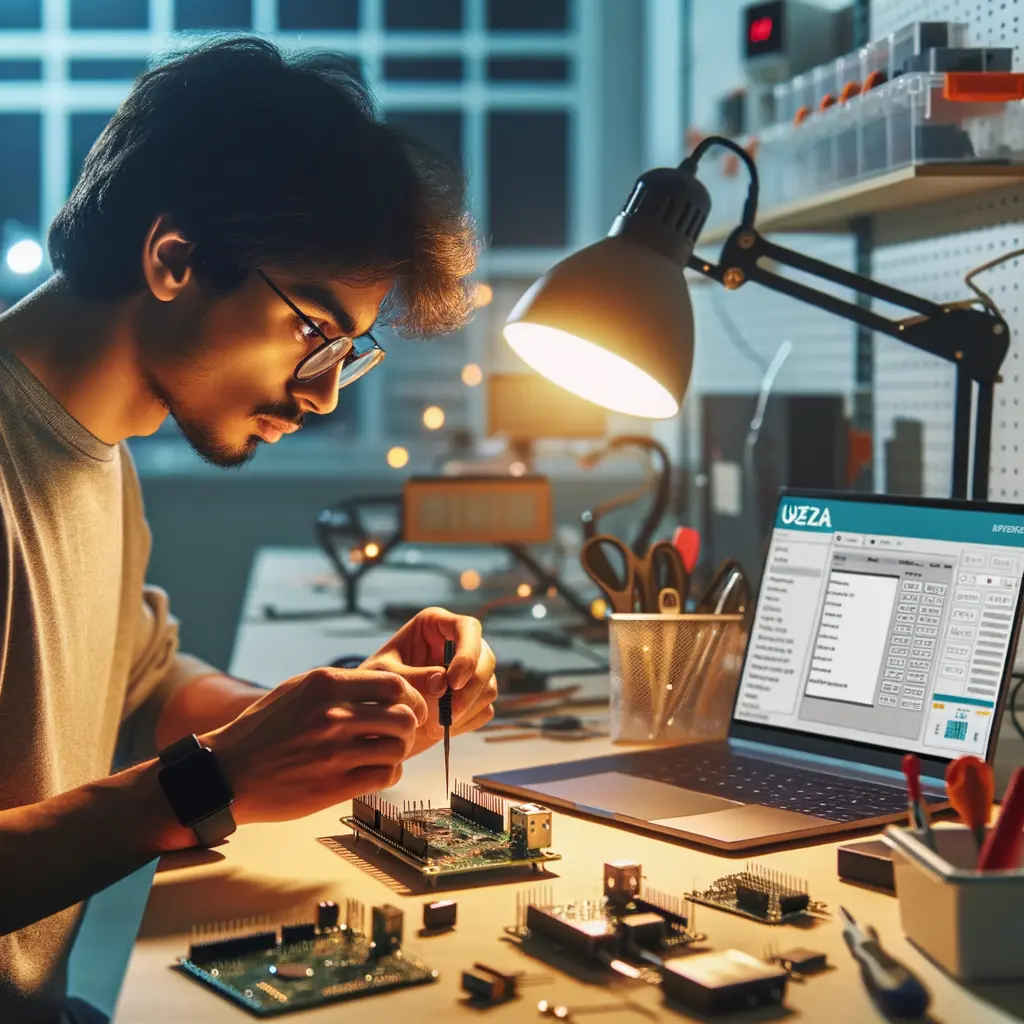
Hey Tuya’s consumer demos were impressive, yet the bigger story may be what’s happening under the hood. Tuya Open—the company’s free developer framework—lets hardware makers add speech, vision and reasoning to new or existing products in as little as ten minutes. During our interview an engineer used the drag-and-drop interface to create an AI thermostat agent with zero code; once flashed onto an off-the-shelf ESP32 board, the device recognised voice commands, adjusted set-points based on occupancy data and pushed alerts to the Hey Tuya app. The same workflow could just as easily power an AI toothbrush that coaches brushing technique or a garden sensor that recommends watering times.
For integrators, this openness is a game changer. Instead of waiting months for vendors to support a niche protocol, you can bind any compliant module to the Tuya smart home platform and inherit the full Hey Tuya AI assistant feature set. Global connectivity, over-the-air updates and privacy compliance are handled in the background. That scalability explains why many CES 2026 innovations referenced Tuya even in booths far beyond the smart-home hall.
As we look ahead, expect tighter Matter compatibility, expanded energy-management routines and perhaps a voice-enabled robot valet. Whatever form the next breakthrough takes, the trajectory is clear: the AI smart home is becoming the default, and platforms like Tuya are accelerating the shift. If you’re planning a retrofit or new build, bookmark our guide to sizing mesh Wi-Fi networks—your future AI agents will thank you.