Why This Galaxy S25 vs iPhone 17 Pro Camera Battle Matters
Flagship cameras have become the single biggest reason many of us upgrade our phones, and the Galaxy S25 vs iPhone 17 Pro debate is already setting comment sections on fire. On paper the fight looks uneven: Samsung positions the S25 as its “regular” flagship while Apple’s 17 Pro wears a pricey crown. Yet both handsets ship with triple-lens arrays covering ultra-wide, wide and telephoto duties, and each promises Hollywood-style video in your pocket. That makes this Galaxy S25 vs iPhone 17 Pro duel a perfect litmus test for how much raw hardware – and clever software – you really need in 2026.
Samsung fans point to the 8K option, a feature that lands the S25 on every list of 8K video recording phones, plus a slightly wider f/1.7 main lens that should gather more light. Apple devotees counter with a brand-new square selfie sensor, deeper integration with Final Cut for iOS and the company’s established record for consistent color science. If you’ve already read our Galaxy S25 camera review or last month’s iPhone 17 Pro camera test you’ll know each device has strengths; what’s missing is a true head-to-head scenario. This article fills that gap, breaking the shoot-out into hardware specs, daylight performance, video, low-light, and a final verdict. (If you’re interested in sensor technology history, check our deep dive on the evolution of Samsung’s ISOCELL sensors.)
Lens Line-Up & Sensor Specs: Paper Numbers Explained
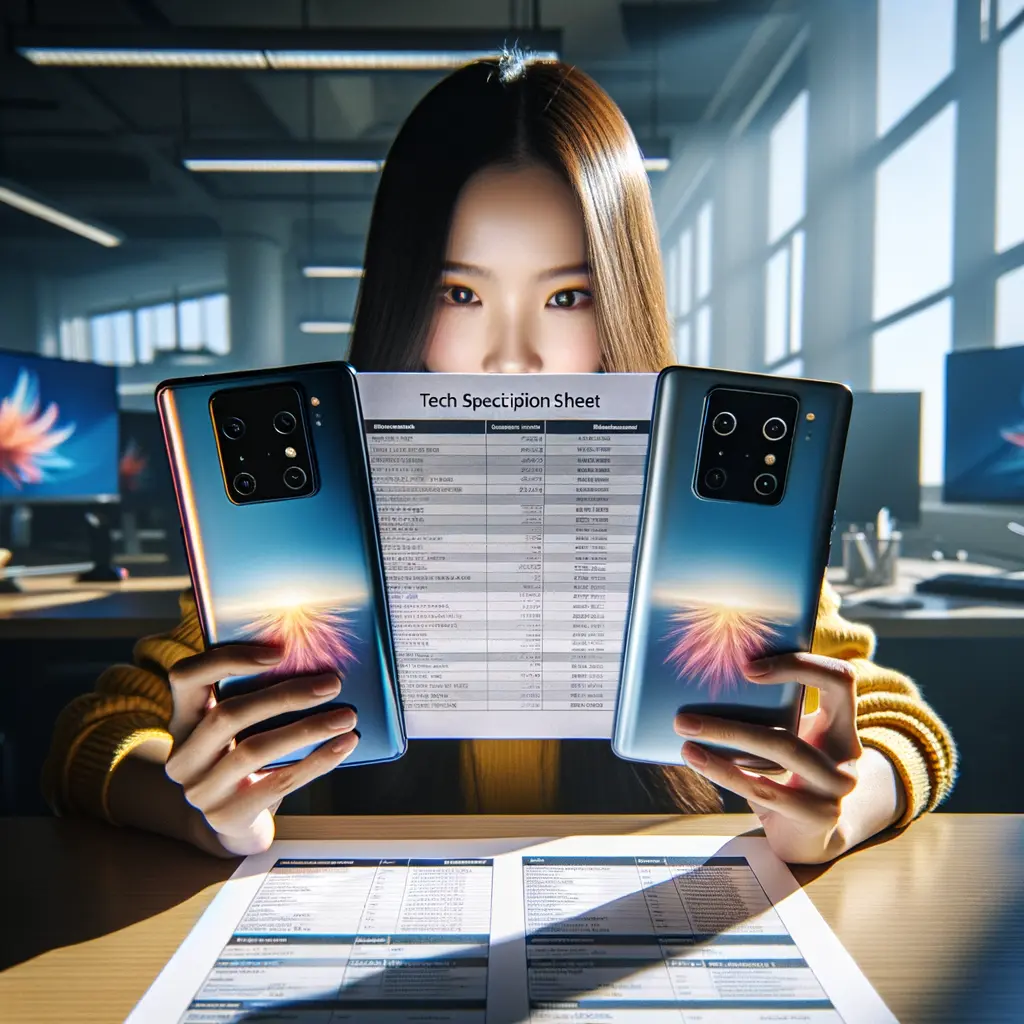
Before we pixel-peep real photos, it helps to decode the spec sheets. The Galaxy S25 vs iPhone 17 Pro spec story starts with Samsung’s 50 MP 1/1.3-inch main sensor, a 12 MP ultra-wide capable of 4K slow-motion, and a 10 MP 3× telephoto. Apple counters with a 48 MP 1/1.28-inch main, a 12 MP ultra-wide, and an improved 12 MP 4× periscope. While megapixels grab headlines, pixel size, lens aperture and image-signal processing (ISP) matter just as much. Samsung’s f/1.7 aperture is brighter than Apple’s f/1.8, giving the S25 an inherent light advantage for night scenes. However, Apple’s Photonic Engine and Smart HDR 8 promise cleaner low-light frames and more balanced exposures even with a slightly slower lens.
On the video front, the S25 supports 8K30 on its main sensor, earning it a place among current 8K video recording phones. The iPhone 17 Pro keeps resolution at 4K60 but layers on advanced codecs (ProRes Log, Dolby Vision) and a refined gimbal-level sensor-shift stabilizer. Both phones share 4K60 on the selfie camera, but Apple can seamlessly flip orientation thanks to that clever square sensor – a small feature that videographers adore.
Specs alone never tell the whole story, yet they frame expectations. If numbers decided the match, Samsung would win on raw resolution while Apple would prevail on lens reach. The real question: how do these choices translate to images normal users care about? We’re about to find out.
Daylight Photography: Color, Detail & HDR Face-Off
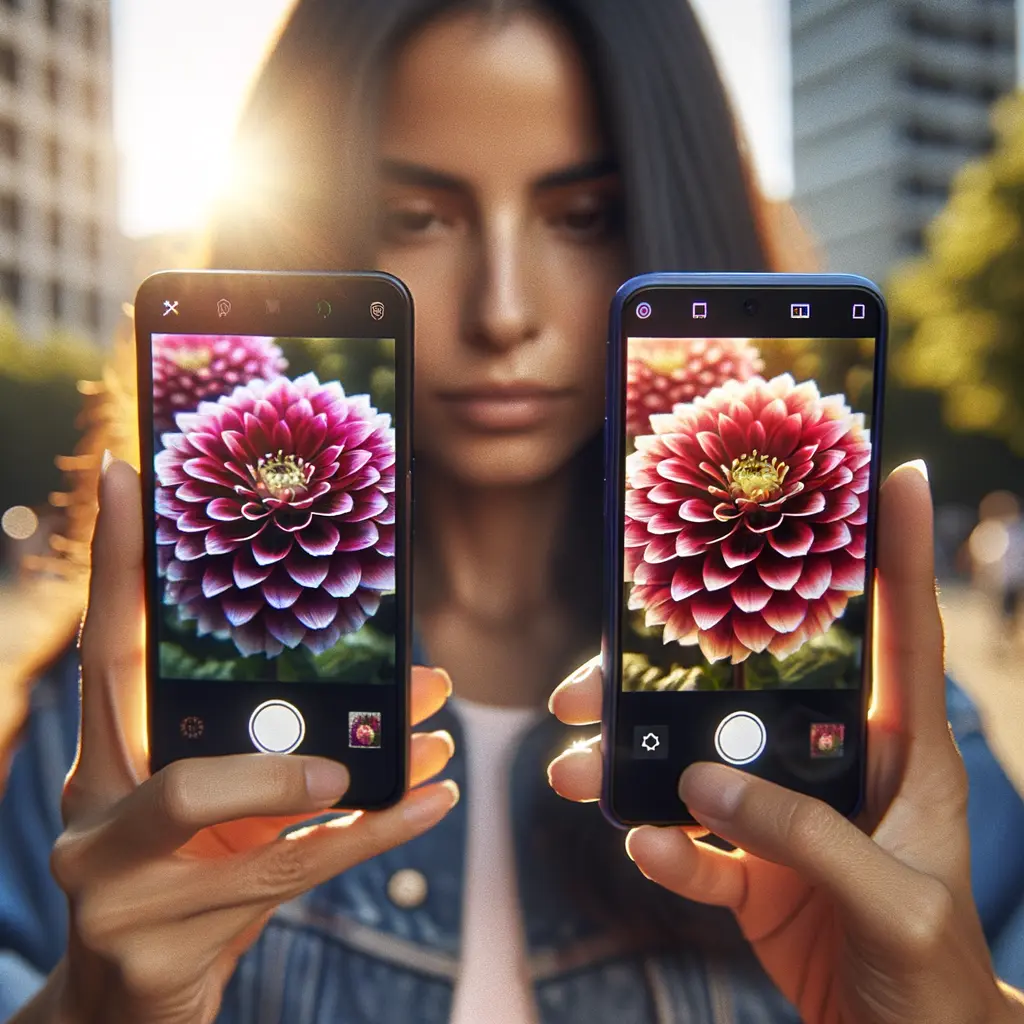
Sunny conditions should be the easy part, yet this is where manufacturers show their color science cards. In our controlled outdoor scene the Galaxy S25 pushed punchier greens and warmer reds, a trend we first noticed in our standalone Galaxy S25 camera review. The iPhone 17 Pro, by contrast, rendered a cooler, more neutral palette that photographers describe as “true to life.” Neither approach is wrong; it depends on whether you prefer Instagram-ready pop or editorial accuracy.
Zooming to 3× and 4× under the same light, Apple’s longer periscope maintains more micro-detail – notice the sharper roof tiles and cleaner text on distant store signs. Samsung’s 10 MP 3× suffers from mild noise reduction blur, though it still beats most mid-range telephotos. Both phones nailed HDR, keeping sky highlights and shadow detail intact, but Apple preserved specular highlights on reflective cars a touch better.
Macro attempts revealed an interesting quirk: the iPhone’s larger sensor delivered creamier natural bokeh when shooting a flower at 10 cm, whereas the S25 engaged its dedicated focus-enhanced mode, producing an image that appears artificially sharpened around the stamen. Color differences aside, daylight performance is effectively a draw for casual shooters. Still, the Galaxy S25 vs iPhone 17 Pro rivalry shows its first crack here: Apple’s optics deliver cleaner telephoto shots, while Samsung’s saturation will appeal to social-first users.
(Full comparison video embedded below – don’t miss the side-by-side slider.)
Video Capabilities: 8K Powerhouse or 4K ProRes Champion?
If still images decide Instagram fame, video decides YouTube glory. The Galaxy S25 vs iPhone 17 Pro debate turns fiery here because the S25’s 8K30 spec appears to dwarf Apple’s 4K60 ceiling. Reality is more nuanced. Samsung’s 8K files are twice the resolution but limited to 100 Mbit/s HEVC and exhibit mild rolling-shutter wobble when panning quickly. Apple’s 4K60 ProRes Log records at a hefty 1.2 Gbit/s, giving colorists 12-bit chroma headroom for grading. Drop both clips into DaVinci Resolve and the iPhone’s dynamic range flexibility quickly surfaces.
Stabilization tests on a brisk walk show Apple’s sensor-shift OIS producing gimbal-like smoothness, especially at 4× zoom where handshake is magnified. The Galaxy S25’s E-OIS hybrid system remains impressive, matching the iPhone during daylight but introducing micro-jitters in dimmer alleys. Audio capture is a wash: Samsung’s voice profile sounds warmer, Apple’s noise suppression keeps traffic hum at bay.
Slow-motion is another talking point in this smartphone camera comparison 2026. Samsung extends 4K120 to both its wide and ultra-wide lenses, making it one of the few 8K video recording phones that also nails high-fps. Apple limits 4K120 to the main sensor but applies superior de-flicker algorithms under LED street lights. For creators weighing resolution vs workflow, the trade-off is clear: Samsung offers headline specs; Apple delivers broadcast-ready files that drop straight into an NLE without transcoding.
(For more on editing ProRes Log on mobile, see our tutorial on color grading with LumaFusion.)
Low-Light & Portrait Mode: When the Sun Goes Down
Night scenes separate smartphone pretenders from contenders. In pub-level illumination the Galaxy S25 produced slightly brighter exposures, thanks to its wider aperture, but also introduced visible luminance noise on brick walls. The iPhone 17 Pro leveraged Deep Fusion and its larger individual pixels to retain texture without cranking ISO, resulting in cleaner blacks and smoother gradients.
Portrait mode further widens the gap. At 1× both devices draw believable subject cut-outs; however, the iPhone maintains background highlight detail so neon signs stay legible. Pushing to 2× and 4×, Apple’s longer telephoto compresses facial features more naturally and keeps edges crisp, while Samsung softens micro-contrast to mask sensor noise. That difference echoes findings from our earlier iPhone 17 Pro camera test.
Selfies reveal an unexpected twist. The S25’s 12 MP front shooter resolves more pores and hair strands, giving a hyper-real aesthetic perfect for TikTok beauty edits. Apple’s square sensor, though, captures a wider field and lets vloggers switch from landscape to portrait without restarting – a workflow convenience influencers will appreciate.
Street videography at 4K30 showed noticeable lens flares on Samsung when passing under halogen lamps, whereas the iPhone controlled blooming but leaned cooler in white balance. Which approach you prefer in this Galaxy S25 vs iPhone 17 Pro low-light duel depends on style, but apple edges ahead on technical accuracy.
Final Verdict: Picking a Winner in the 2026 Flagship Camera Race
After thousands of frames and hours of footage, where does the Galaxy S25 vs iPhone 17 Pro saga end? If we score purely on image quality, Apple walks away with a narrow lead: cleaner telephoto detail, sturdier night video and the most reliable HDR we’ve tested this year. Enthusiasts who value consistent color across lenses – and across generations – will feel right at home.
That said, Samsung fires back with compelling value. It matches daylight performance, adds the thrill of 8K capture, and undercuts the iPhone’s starting price by roughly 15 %. For many users that price-to-performance metric outweighs an extra dB of low-light noise. The S25 also boasts SD Express storage support, letting you offload massive 8K clips in seconds – a workflow perk pro creators shouldn’t ignore.
Ultimately, your choice hinges on priorities. Are you a mobile filmmaker who grades in Final Cut and wants ProRes Log? The iPhone 17 Pro is your pocket cinema cam. Do you crave spec bragging rights, saturated social pics and the flexibility of expandable storage? Samsung has your back. Both handsets push the envelope, ensuring the wider smartphone camera comparison 2026 field remains fiercely competitive.
Whichever camp you choose, bookmark this review and explore our deep-dive on computational photography trends for 2027 – it’ll help you stay ahead before the Galaxy S26 and iPhone 18 rumors start swirling.