Boston Dynamics Atlas Goes Full Human Mode: What Just Happened?
The latest Boston Dynamics Atlas reveal sent shockwaves through the robotics community. In a short demonstration the bipedal machine executed smooth cartwheels, clean backflips and mid-step balance recoveries that looked more like Olympic gymnastics than a laboratory test. For anyone following Boston Dynamics Atlas progress, the leap from controlled hops to graceful multi-axis flips is staggering. At the heart of this showcase is a new whole-body learning framework developed with the Robotics and AI Institute (RAI), led by company founder Marc Raibert. Instead of stitching together separate walking and jumping controllers, engineers trained a single policy in simulation and deployed it directly on hardware—a textbook example of sim-to-real transfer.
Why does that matter? Historically, behaviors refined in virtual environments break down once real motors, friction and inertia enter the picture. By closing that gap, Boston Dynamics Atlas is edging closer to reliable field deployment, not just viral YouTube fame. Early bloopers in the extended clip further highlight how quickly the robot now self-corrects: a slight foot misplacement triggers micro-adjustments in milliseconds, preventing a wipe-out.
If you’re new to the topic, check out our deep dive on Spot’s reinforcement learning kit and our overview of humanoid robots in logistics—both useful primers before we analyse the gymnastic feats you just witnessed.
Inside the Boston Dynamics Atlas Upgrade: AI, Control & Acrobatics
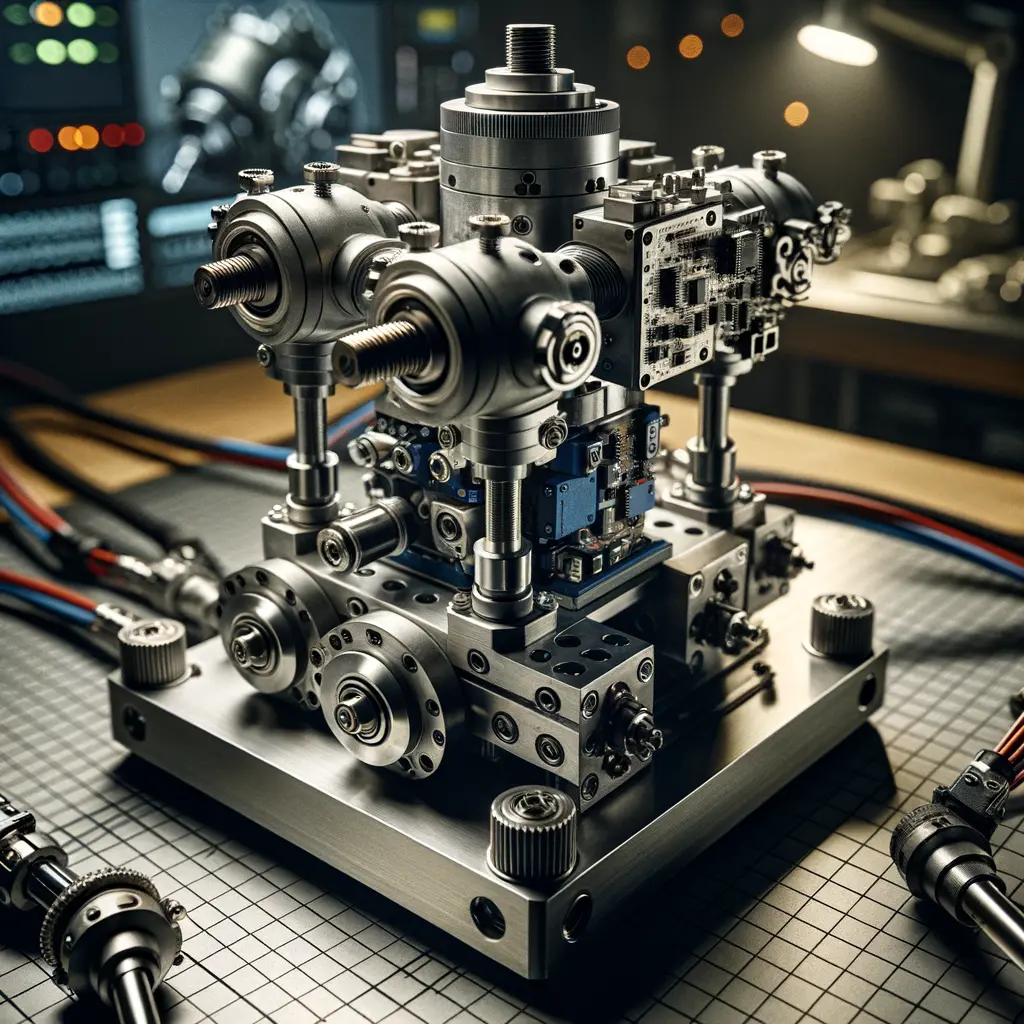
Peel back the glossy video and the Atlas robot upgrade becomes an engineering masterclass. The new controller leans on reinforcement learning, physics-accurate simulation and a dense sensor suite. Internally, Boston Dynamics Atlas now features 56 degrees of freedom—more articulation than the average professional gymnast—and each joint relays force, position and velocity data at sub-millisecond latency. Feeding that torrent of information is a custom perception stack that fuses LiDAR, stereo vision and inertial measurement units, allowing the robot to understand its pose while upside-down during a backflip.
The Robotics and AI Institute’s contribution centres on a whole-body trajectory optimiser. Instead of pre-scripted moves, the optimiser predicts contact forces for every limb, then selects actions that keep the centre of mass within a dynamically shifting support polygon. The result: authentic robotic acrobatics rather than choreographed animations. A prime example is the sideways cartwheel where Boston Dynamics Atlas swings its arms for angular momentum, plants each foot confidently and dissipates landing impact through bent knees—mimicking human biomechanics.
Under the hood, all behaviours were trained in a NVIDIA GPU cluster running MuJoCo physics. Crucially, the team achieved nearly zero additional tuning when porting the policy to the 80-kilogram physical robot, a textbook win for sim-to-real transfer. For readers interested in deeper technical detail, our article on torque control vs. position control in humanoid robots provides relevant background.
From Gymnast to Factory Worker: Enterprise Atlas Targets Hyundai
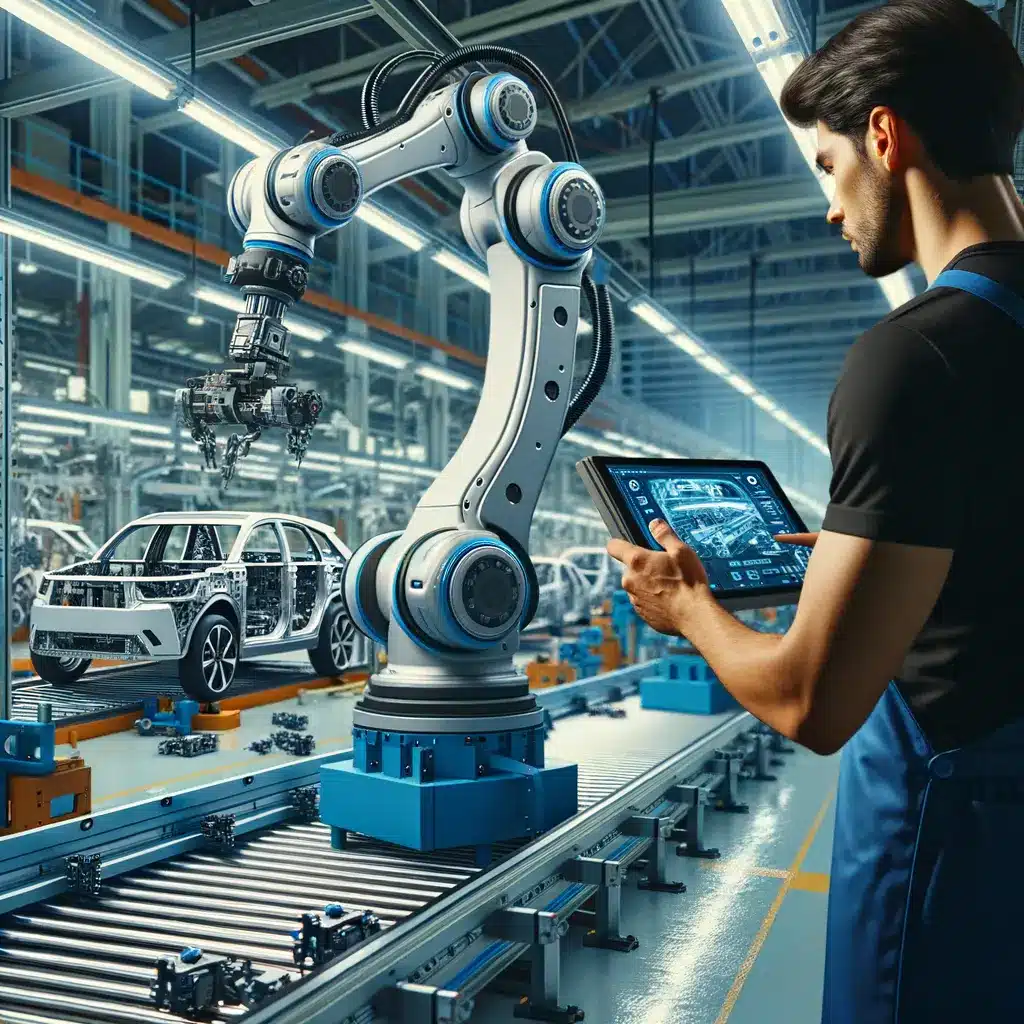
While internet audiences celebrate flips, Boston Dynamics is eyeing production floors. The Enterprise version of Boston Dynamics Atlas—scheduled for pilot deployment at Hyundai Motor Group’s MetaPlant America—trades the flashy acrobatics for repeatable precision tasks. Sporting a four-digit tactile gripper and industrial-grade actuators, the unit will begin with part sequencing before graduating to full component assembly by 2030.
Why port acrobatic research into manufacturing? Consider the demands of a modern car plant: narrow aisles, awkward part bins and unpredictable human co-workers. The same control algorithms that let Atlas stick a blind backflip also help it recover from a misplaced box or unexpected shove on the factory floor. Balance, contact-aware manipulation and quick path planning translate directly into uptime and safety metrics that CFOs track.
Hyundai confirmed that Boston Dynamics Atlas robots will work side-by-side with existing Spot quadrupeds for inspection, creating a mixed fleet of humanoid robots and four-legged scouts. If the trial succeeds, expect ripple effects across aerospace and logistics—similar to how collaborative arms redefined electronics assembly a decade ago.
(YouTube video of the new Atlas demo would be embedded here in the live post.)
China’s Agibbot Kung-Fu Humanoids: How They Stack Up Against Atlas
Across the Pacific, Shanghai-based Agibbot is pushing its Lingshi X2 humanoids into martial-arts territory. Viral footage from the historic Shaolin Temple shows multiple robots performing synchronous kung-fu forms beside monks. Their Genie Operator 1 (GO-1) model relies on zero-sample learning: instead of hundreds of labelled sequences, the system infers latent actions from a handful of vision frames, then generalises. That approach addresses the same data bottleneck Boston Dynamics Atlas faced in early years—high-quality labelled motion is scarce.
Multi-robot synchronisation is another highlight. Where Boston Dynamics Atlas currently performs as a solo act, Agibbot demonstrated 16 humanoid robots dancing in tight formation during its one-hour “Agibbot Night” gala. The spectacle doubled as a stress-test for endurance, thermal management and wireless co-ordination, mirroring how Atlas blooper reels expose edge-cases.
Technically, the Lingshi X2 carries fewer degrees of freedom than Boston Dynamics Atlas, but compensates with lightweight composite limbs and modular battery packs for quick swaps. Observers note that its foot placements during Webster flips appear less explosive than Atlas but still impressive for a platform aimed at cost-sensitive entertainment and education markets. For a broader context, see our previous comparison of Tesla Optimus and other humanoid robots.

Faraday Future’s Embodied AI Line-Up: Robots You Can Actually Buy
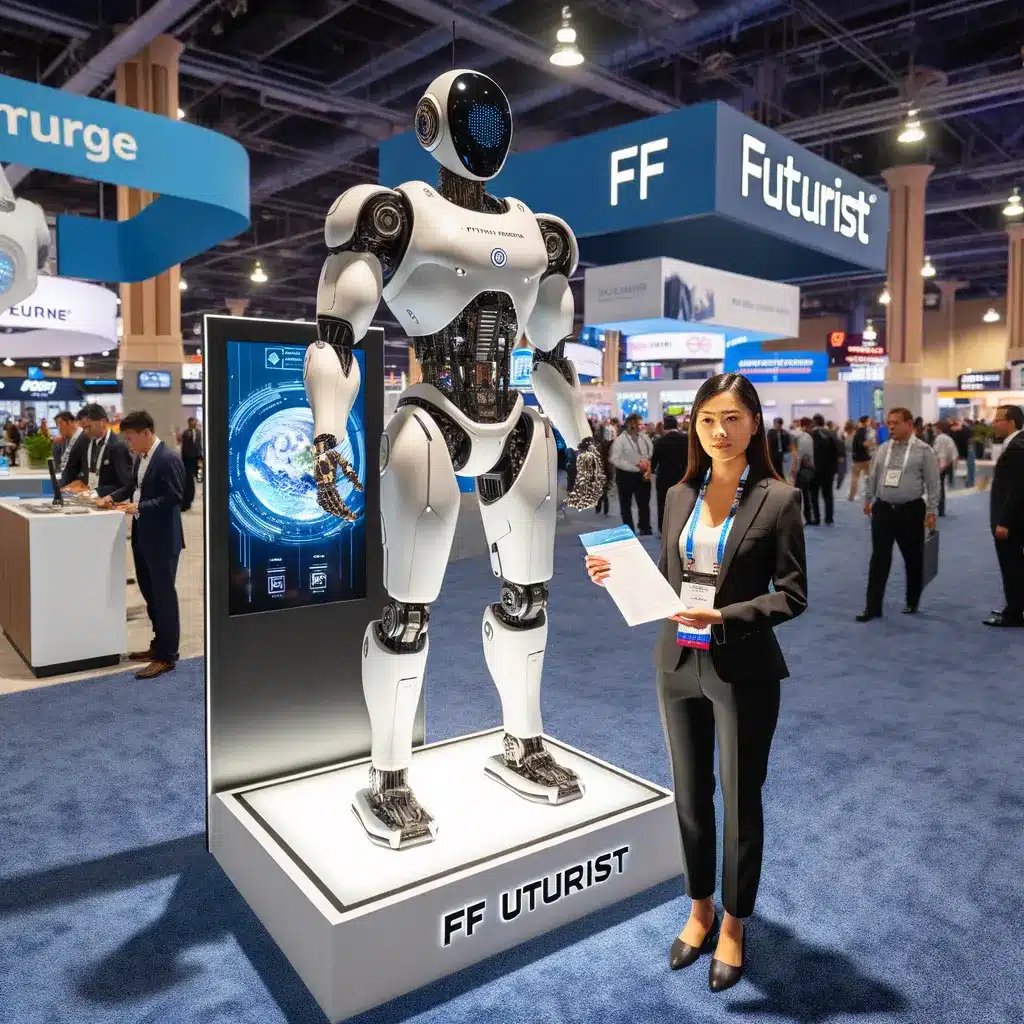
The third headline of the week comes from Las Vegas, where electric-vehicle hopeful Faraday Future unveiled three commercial robots: the FF Futurist, FF Master and FX Aegis quadruped. Unlike most concept showcases, Faraday published real pricing—$34,990 for the Futurist humanoid, $19,990 for the Master and $2,499 for the Aegis dog-bot—plus non-binding B2B deposits covering 1,200 units. Deliveries are slated for February 2026.
Strategically, Faraday is leveraging its automotive supply chain to accelerate robot manufacturing, mirroring how Boston Dynamics Atlas benefited from Hyundai’s backing. Each robot is tied into a 3-in-1 embodied-AI ecosystem: hardware, an open-source brain and a decentralised data factory for continual learning. Scenario-specific skill packs (security patrol, retail greeting, education demos) are modular add-ons—echoing the app-store model that drove smartphone adoption.
Although performance specs do not yet match Boston Dynamics Atlas or Agibbot’s Lingshi series, Faraday’s value proposition is affordability and early access. A community of developers can stress-test real-world use cases long before high-end robots trickle down in price. If successful, this could do for humanoid robots what Raspberry Pi did for embedded computing.
Why the Boston Dynamics Atlas Breakthrough Matters for 2030 and Beyond
Taken together, the week’s announcements sketch a future where Boston Dynamics Atlas, Agibbot’s kung-fu troupe and Faraday’s retail greeters coexist across industries. Boston Dynamics Atlas remains the benchmark for raw mobility and high-fidelity control, but its real significance lies in proving that sim-to-real transfer can shrink R&D cycles. When a policy that learned flips also handles factory part sequencing, the boundary between research demo and deployable product evaporates.
Humanoid robots are no longer novelties; they are platforms converging with cloud AI, edge computing and advanced batteries. Expect rapid cross-pollination: Agibbot’s latent-action vision could inform Atlas perception, while Faraday Future’s low-cost hardware could seed an open developer ecosystem.
For businesses, now is the moment to run small-scale pilots—whether that’s a Boston Dynamics Atlas unloading pallets, an Agibbot entertainer drawing crowds or an FX Aegis securing warehouses. Early adopters will shape safety standards, workforce integration and ROI models that everyone else will follow.
As we march toward 2030, remember that each elegant cartwheel or perfectly timed kung-fu kick represents thousands of lines of code, terabytes of training data and countless human hours. The next time you watch Boston Dynamics Atlas spin through the air, you’re witnessing the dawn of a workforce where steel, silicon and software move with near-human grace.